The earliest carnival ride known as the Octopus was built by Lee Eyerly of Eyerly Aircraft Company in Salem, Oregon. It had eight arms with one car per arm that rose up and down, rotated, and spun. It spread across America in the 1930s (Wikipedia).
Esther Takei Nishio used to help her dad with his carnival games. Mr. Takei was a Japanese immigrant who had started with little and built a suite of businesses that included fishing boats, rental property, and a farm. He began with round rings and a few bottles in Venice, California, hosting games of chance and showing off his near perfect English.
He loved Venice and walked around proudly in a dark blue double-breasted suit. His daughter Esther was a successful high school student in 1942 when a notice came that her dad was to be taken away for interrogation and she and her mother were to be sent the Granda War Relocation Camp in Eastern Colorado. They left Venice with the suitcases they could tote.
Long story short Esther died recently and the story of her father and her time in Venice was little known even among the members of her own Presbyterian church.
She became one of the first imprisoned Japanese-American citizens to be released in a test case that paralleled what happened to Rosa Parks. Her experiences from the camp and the period of re-integration were her own private story that Joe Mozingo of The Los Angeles Times uncovered.
I keep circling back to the Octopus and her father. When he was allowed to go home at the end of WWII, all of his equipment and businesses were gone. He had to start over as a gardener. His Octopus had been stolen along with his boats, tractors, and fishing nets.
(data from Column One: She was a test case for resettling detainees of Japanese descent from The Los Angeles Times November 30, 2019, by Joe Mozingo)
Bertha Mae Bevers is 90 and still alive. As a child she immigrated to California’s Central Valley in the Dust Bowl era to work on truck farms. She and her fellow African-Americans lived in Teriston on the edge of the desert in tents. She remembers two houses but a tent was her house. Teriston’s water was irregular and often fowl in the all-black colony .
She looks back on childhood in a town that was beyond where the Okies lived and not as nice. The place was logically uninhabitable.
(data from How Racism Ripples through Rural California Pipes by Jose A. Del Real from The New York Times, November 30, 2019)
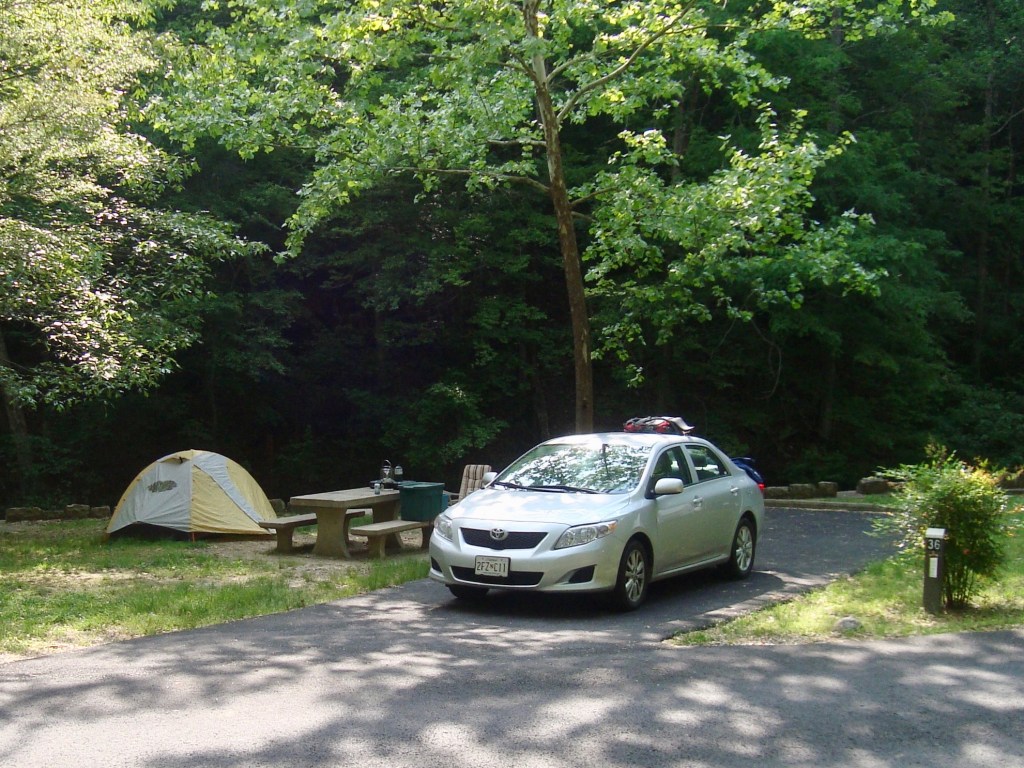
The tent part, like the Octopus ride, sticks with me because it has been my luck to be able drive around America tent camping in 47 states including multiple stops in California.
As a child I thought myself brave for riding the Octopus at the state fair. Back from my trip to in the sky, I had something to brag about to my friends and think about for weeks.
Esther and Bertha Mae’s stories are from two of the articles I read in newspapers on Saturday, November 30. Each day I read The Herald (Rock Hill), The Charlotte Observer, The Los Angeles Times, The New York Times and The Washington Post.
I like merging my mind with what is happening in the world as a whole. I like understanding what is known about events objectively and finding stories about people I have never heard of. I feel elevated a bit and bigger after reading.
Most people around me think I am odd. They seem to be happy with news feeds via Facebook or Twitter or what spinners posing as journalists say on Fox News. Many think the news is something to be avoided.
Maybe it’s my love of writing that compels me to read what journalists find out about us. Everyone has a story and somehow their stories become part of my story through my daily newspaper reading. My mind often leaps to something I know personally and connects as in the tent and the Octopus.
I like to think I am a better human being for my reading and I seek the grace to endure what life brings in the way Esther did and Bertha Mae continues to do. Our interior stories are mostly silent and unknown. Jose A. Del Real and Joe Mozingo do us a service of incalculable importance in bringing them to our attention.
 Danny Forrest