Saluda Baptist Church
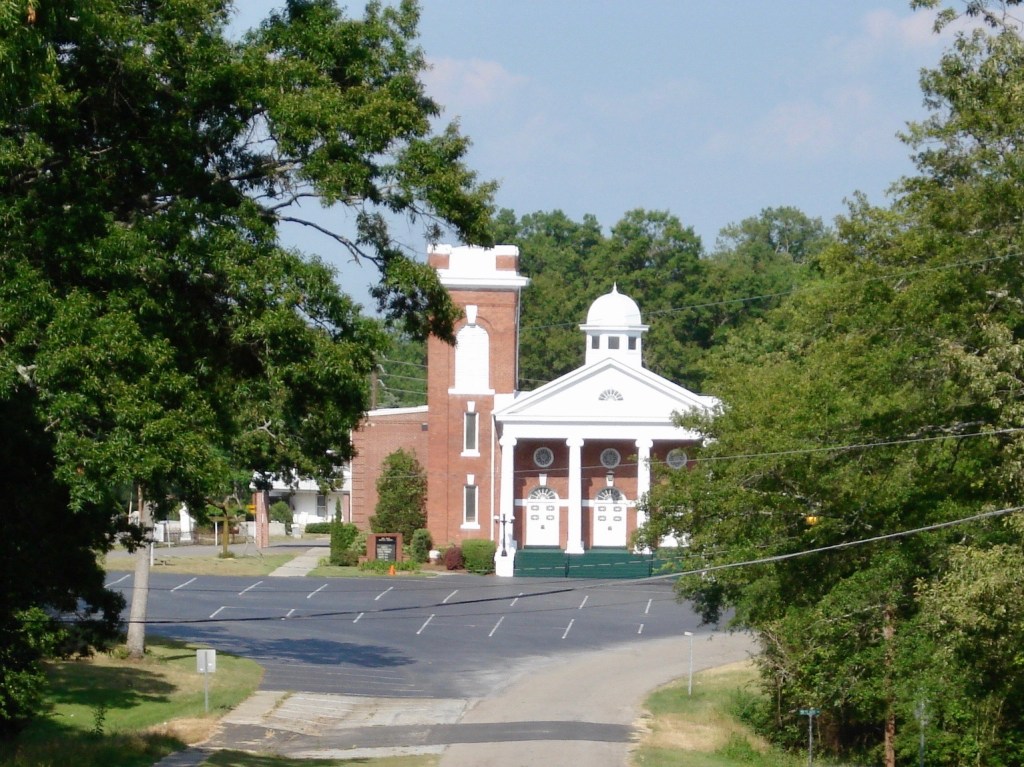
Today I ate a saltine. The taste lingered on my tongue. I thought of taking communion as a boy in Saluda Baptist Church.
I marched up and down the front steps singing Onward Christian Soldiers, threw spit balls into a spinning fan during Sunday School, and rode in a Cadillac hearse to my father’s funeral at 13.
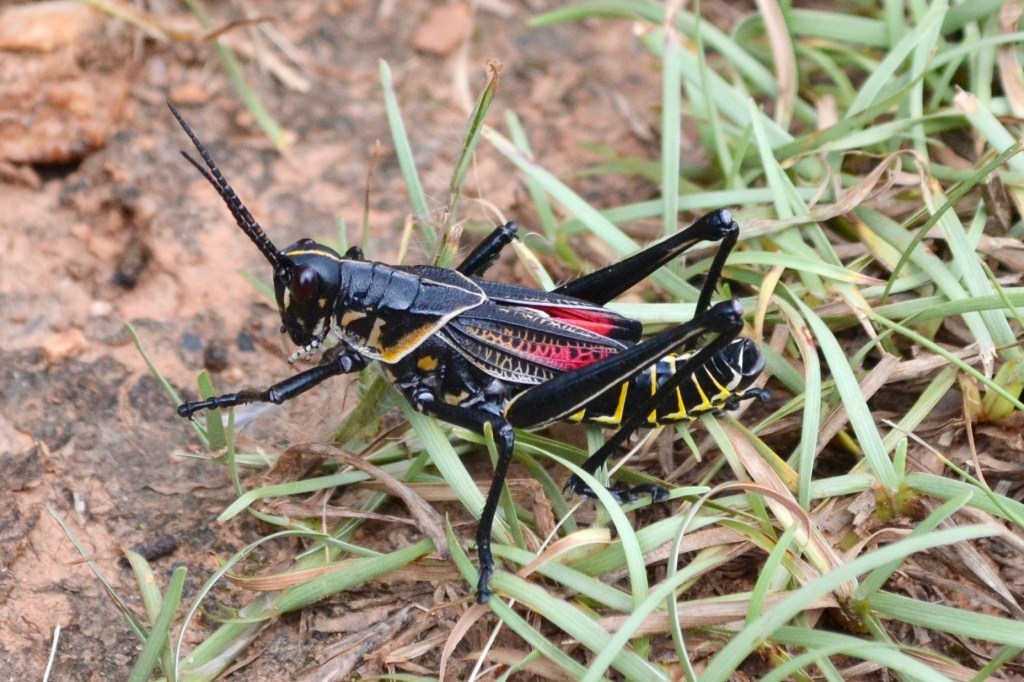
Grasshoppers
By 1958 I was smart enough to identify the make, year, and model of a car from as far away as I could see and kid enough to love grasshoppers. The grasshoppers of my youth were colorful and still overrun Saluda, South Carolina, in the hot summer months.
I zoomed in on the one pictured above a few years back in my mother-in-law’s yard. She didn’t realize that most grasshoppers are green or brown, less flamboyant.
Of course I walked around barefoot, even went to school barefooted, so I was expert at stepping on them. They crunched loud enough to be heard and ran around in groups or families in the swarming time of summer. I delighted in the range of sizes; the smallest were mostly black and less colorful.
I remember looking down to be simultaneously pleased and appalled to see grasshopper guts oozing between my toes and outlining my feet. Catching them was my first form of hunting.
Before the hunt, I would find a jar with a lid that I had already punctured or get a fresh jam jar and poke holes in the metal lid with an ice pick. Once I miscalculated one of my jabs and sent the metal of an ice pick through the soft tissue of my palm so that its tip emerged from my flesh.
Clay Cockrell, my brother Cally, and I would head out on hunting trips to see who could jam the most critters into a jar. Capturing the prey required kneeling down and anticipating the coming jump.
Once in hand the grasshopper tickled and scratched–fascinating to a boy who had not yet formally learned about exoskeletons. In my imagination I was subduing a little monster. Up close they were as fearsome as the monsters I saw in the double feature movies at the Indian Chief movie theater downtown.
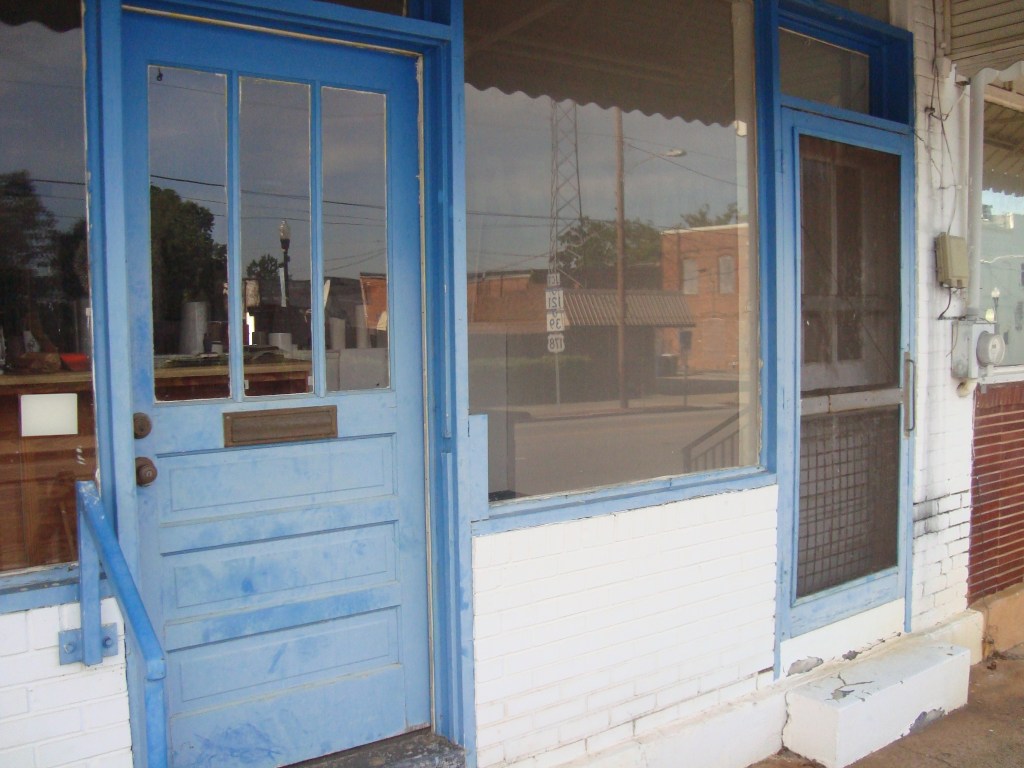
Frank Hite’s Grill
A through traveler headed west through Saluda on Church Street would end up in McCormick, South Carolina, almost in Georgia and pass by my old house on West Church Street, four blocks from the site of Frank Hite’s old hamburger cafe downtown Saluda.
How many times a week would I walk past it? Seven or more for sure. I was always afoot. My mother Leona would lock the screen door and bid her children to stay away until meal times. Ever seen Opie Taylor walk around fictional Mayberry? I was a real version of him through the boyhood of the 1950s and 60s, except for the times Leona left my father Harold to take us north to live in or near Altoona, Pennsylvania.
Hite’s was just a business I walked past on my way to the Five and Ten (an elaborate forerunner of today’s Dollar General) or to the F & S Drugstore to peruse the latest comic books. I made daily tours of downtown businesses including C.B. Forrest and Sons Drygoods store where my dad worked.
I took the two doors of Hite’s for granted as a small child. In the early 1960s I started working for Alfred and Miriam Adams at the Saluda Red and White Supermarket just past Truman Trotter’s barbershop four doors down from Hite’s. One of my duties their was to deliver hundred-pound burlap sacks of russet potatoes via hand truck to Mr. Hite’s cafe. I came to know the place first from the back entrance.
Alfred Adams was savvy businessman who had developed a strong following of both black and white customers. He had a white Chevy van with a Red and White store logo on the sides that I drove to deliver groceries–primarily to African-American customers along Boughknight-Ferry Road in their separate part of downtown.
Sometimes I would take lunch in his place on Saturday. I entered via the left-hand door, stepped to counter to order a hamburger grilled in sight with a side order of fries from the potatoes I delivered. Frank patted hamburger to form my meal with a metal spatula chewing an ever present cigar in his mouth. He cooked, nodded when the order was done, and seemed averse to talking. I never saw him without his white paper cap and dirty apron and I am not sure I would have recognized outside of his cafe.
I liked sitting in one of the small tight booths to claim a space for my own next to the junk box music selectors. For a quarter I could hear Ray Charles sang as I ate. I liked is lyrics and delighted in hearing anything by Sam Cooke.
I usually ate alone as my fellow employees never left the Red and White Supermarket during operating hours together. We had about fifteen minutes to grab food and had to be on duty to provide customer service that was unparalleled to patrons who overran our small “supermarket” Thursday through Saturday.
What came to worry me was the door to the right. African-Americans came through that door to order and had little or no space to sit down to eat. The grill behind both doors was one unit but the wall was a kind Berlin Wall separation. I so wanted to go in via the right door for some inexplicable reason.
Black and white customers did not mingle by law and custom. I began to think about the world I lived in by then at age thirteen forward. At night at home I begin to follow the Civil Rights protests led my first and foremost hero, Martin Luther King. My conscience led to formation of a sense of social justice.
The double doors are a symbol of the terrible duality of existence that I took for granted growing up in my white world of separation.
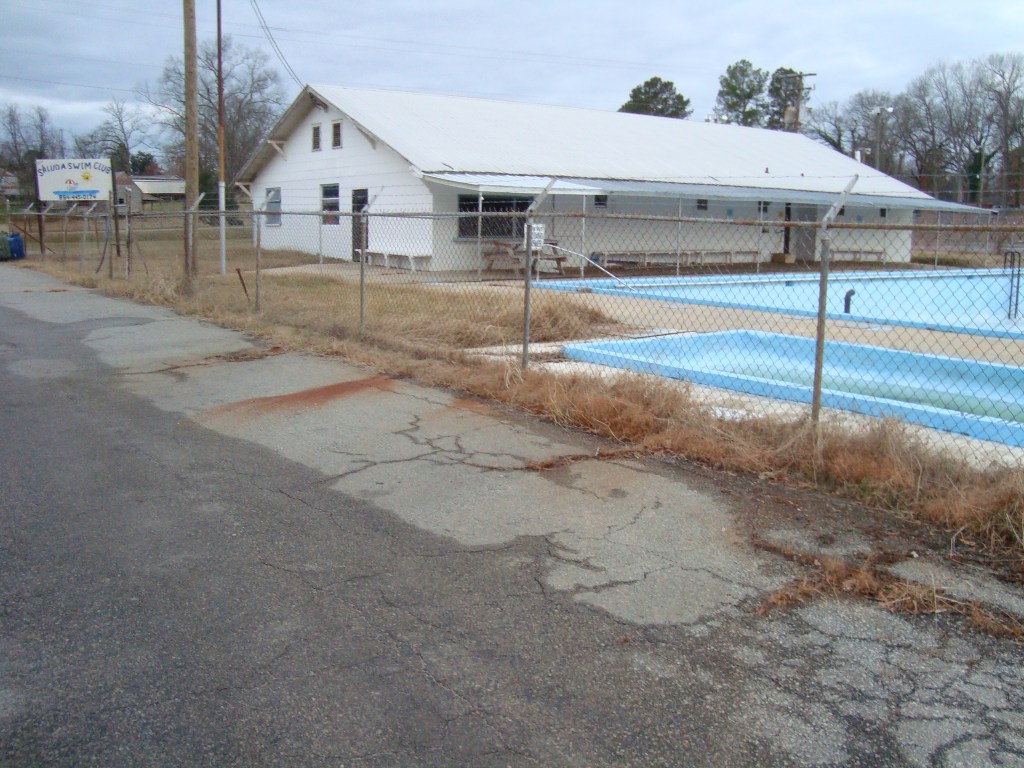
Saluda Swimming Pool
This pool was about a two-mile walk from my house on West Church Street. As I child I would walk to it in the summer nearly every afternoon, coming home with wrinkled skin from near constant immersion in water. Back then the building pictured was longer and the missing extension was built of logs, dank and white-washed. There I changed clothes, showered, and took my wire basket of clothes back to the window at the entrance for safekeeping.
I learned to swim in it around seven or eight, taking lessons from a visiting swim instructor. My pals hung out there and we played childish games like listening to the bottom of the a metal ladder to decipher a message from above. We lined up to do various dives including flips, our most daring feat.
The longer building held a commons areas with a juke box and table tennis table. As I aged, I came to meet up with girls and socialize. Going to the pool was what I did as an elementary school child in summer. My days were arranged so that I could walk to arrive at opening time, 1 o’clock, I believe, and leave at closing, 5 P.M.
It was my world but it, like the right-hand side of Frank Hite’s Grill, was a white world. Back then I never gave a thought to the all-whiteness of it. In my old age I have accumulated all the history books available on my old Saluda and I discovered that the pool was dug as a Civilian Conservation Corps project during to Depression. How it became a club for whites only is not clear.
Indian Chief Theater
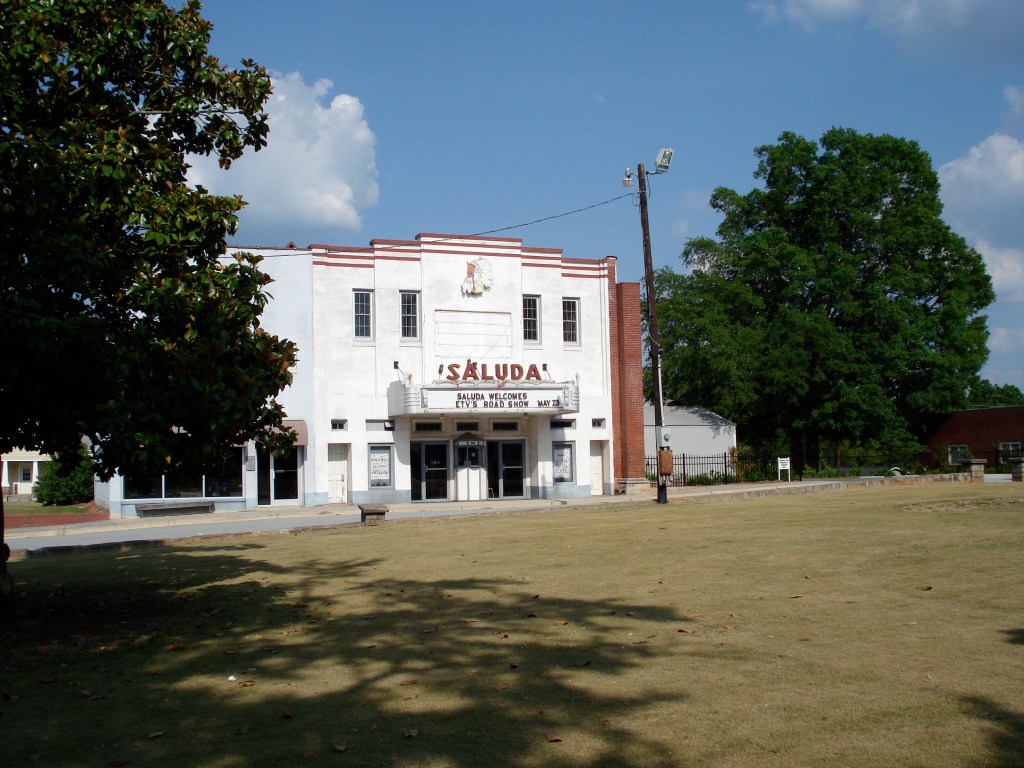
Until the summer of my thirteenth year I spent nearly every Saturday afternoon in the Indian Chief. I made sure I had about 50 cents and walked five blocks to reach it. Always a double feature.
I usually arrived early to climb on the two magnolias that used to be on the courthouse lawn just in front. We climbers must have looked like so many monkeys moving through the limbs.
Pay a quarter out front, once in turn left and stop just before the curtain to buy a Zero bar for a nickel or a bag of pop corn. Move way down front, maybe one or two center aisles back, take a seat, and wait for the previews of coming attractions to start. God, how I loved the previews and the big sound and big screen.
Saluda County Courthouse
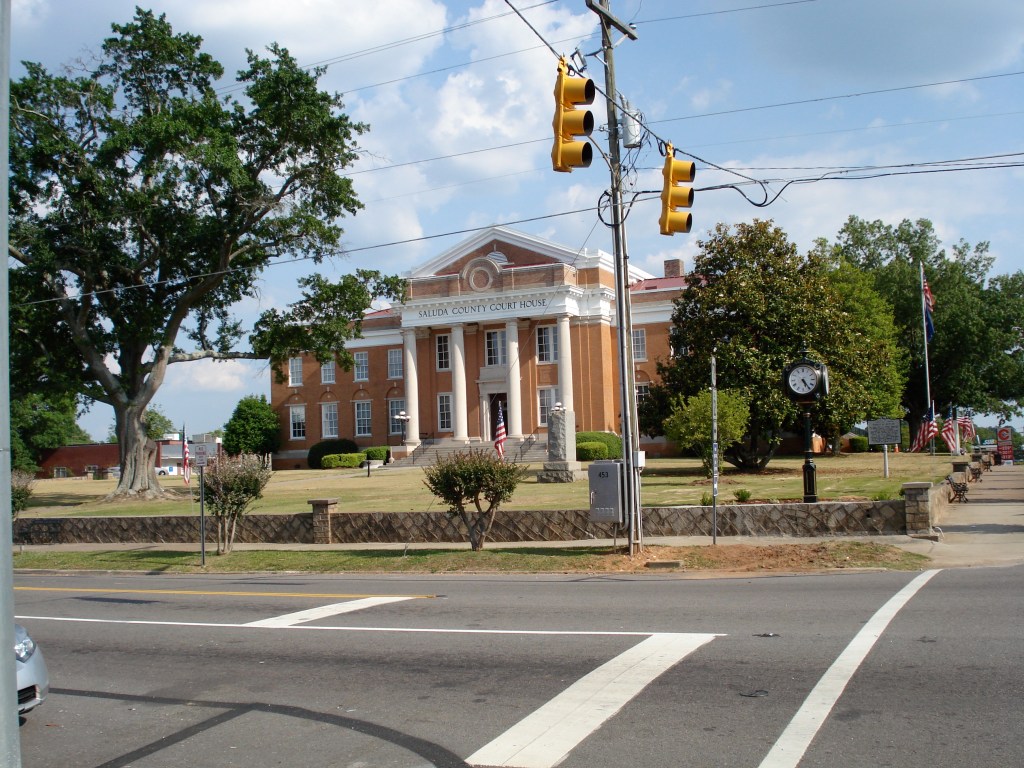
Go back to 1963 or 1964. Make it Saturday afternoon. I am walking across from the courthouse pushing a two-wheel cart full of groceries to a customer’s car as a bag boy for the Red and White Supermarket. As I moved down the street to follow the customer I would weave in and out of heavy foot traffic.
The wall in front of the courthouse would be near full up with people sitting in the sun. Some would be in overalls but many would appear to be dressed for church. They were an older crowd, mainly men. Strangely they were a mixed crowd of black and white. People just talking, telling stories, watching the street action and passing cars.
Downtown Saluda of the era was like a section of Manhattan or Brooklyn. All hustle and bustle. People came to town to do business and to socialize. Walking around involved dodging pedestrians entering stores or window shopping.
What pleased me but seemed odd was that they were a mixed crowd, black and white.
Leona, Butch, Cally, and Me
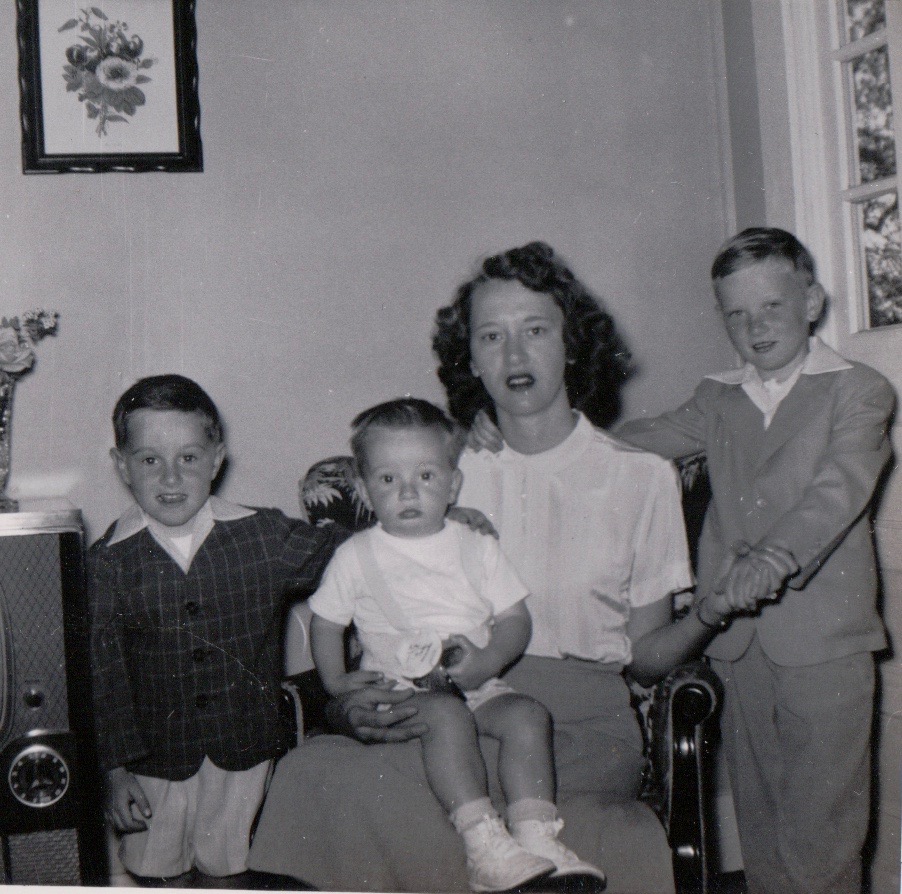
That is me on the left around 1953. Butch is just inside the front door on my mother’s right side. I suppose my father Harold took the photo.
We are in what was known as a living room in the 1950s. I was not allowed to hang out in the area too much, though I spent a lot of time in the chair my mother is sitting in.
Why? I was often guilty of “back talking.” For the crime of not directly obeying, I could be sentenced to it for half an hour. Of course, I was switched and I tasted the flavor of a bar of Ivory soap a a few times for saying something I should not have.
The taste of soap is unpleasant and a switch across the back of the legs stings, but I could endure both better than sitting. I tried hard to conduct myself in a way that would keep me out of the chair by the front door.


 Danny Forrest