Sort of. Mentally. OK. . . in my reading and viewing I am often in China. Right now I have just seen Noraly Shumaker (aka Itchy Boots on You Tube) cross back into China from Mongolia on her 1987 Yamaha Tenere after previously spending around a month in the world’s most populous and fastest ascending country.

Maybe my claim to being in China is stretched but I do have some actual personal connections, including my former table tennis partner Aiping. I will get back to that after plunging you into some borrowed words from someone recently back from China.
Evan Osnos from “The Future Is Made in China” in the August 10, 2026 The New Yorker:
On the south side of Bejing, I visited China’s most famous auto plant–the Hyperfactory, a campus the size of a hundred soccer fields that was built in fourteen months. It belongs to Xiamomi, a company that made its name selling smartphones and household goods, such as electric toothbrushes and frying pans, before entering the car business.
In the lobby, I found a delegation of Chinese visitors unfurling a hammer-and-sickle flag for a group portrait. Beyond them was a busy Starbucks counter. Suspended from wire overhead, a sports car was poised as if racing around a Möbius strip, meant to evoke the unending pursuit improvement.
A guide herded us onto gold carts and drove us into a cavernous site with so few visible workers that one could be forgiven for thinking that it was a national holiday. The cars were built by some seven hundred robots, packed together in intricate, choreographed formations controlled by thick bundles of wires. Fresh parts arrive aboard a hundred and twenty-seven autonomous carts, which bleat “Make way!” at humans who wonder in their path. According the company, a finished car rolls off the line every seventy-six seconds.
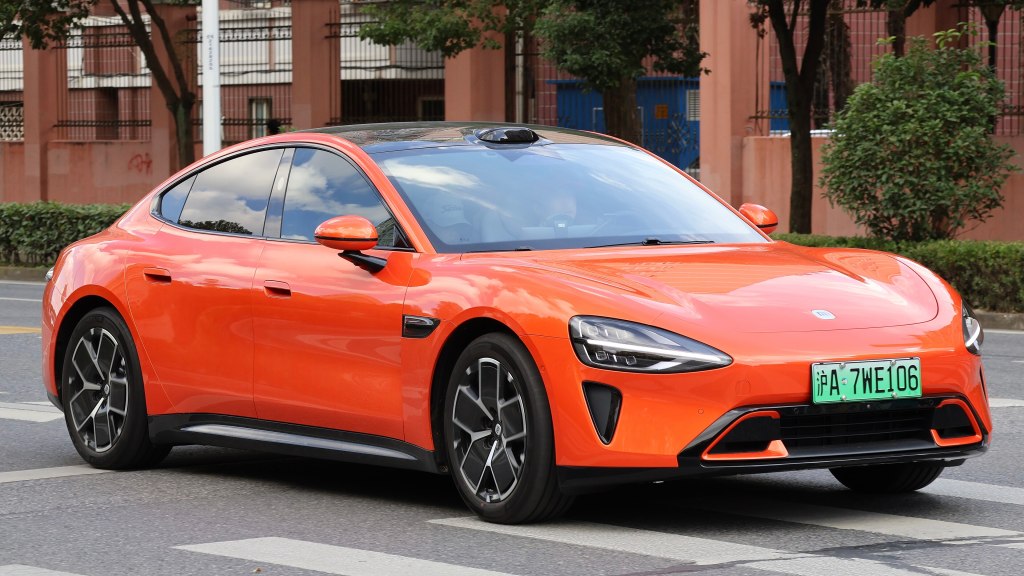
At the end of the tour, I was directed to a track, where a driver waited in a bright yellow Xiamo SU7 Ultra. I climbed into a passenger seat. He smiled and said, “Three, two, one,” and jammed the pedal down. I hadn’t focused on the details of what we were doing, which was probably a mistake. The car burst forward with the kind of momentum one rarely experiences without jet propulsion. As I learned later, the SU7 Ultra has 1,548 horsepower and goes from zero to sixty in less than two seconds, faster than a Ferrari. I was pressed into my seat, and a wave of queasiness surged in my chest. As we rounded a curve and burst down a straightaway, I kept my eyes on the horizon and wondered if my life insurance policy was in order. The drive gamely offered another lap, but I waved it off.
This is a small slice of his long article which offers insights into the twenty thousand Chinese-American scientists who left American from 2010 to 2021 and the overproduction of housing units, some fifty million standing empty. Enos lived in China from 2005 to 2013 and is a staff writer for The New Yorker. His experience and gift for words are far beyond mine. They fire up my neurons.
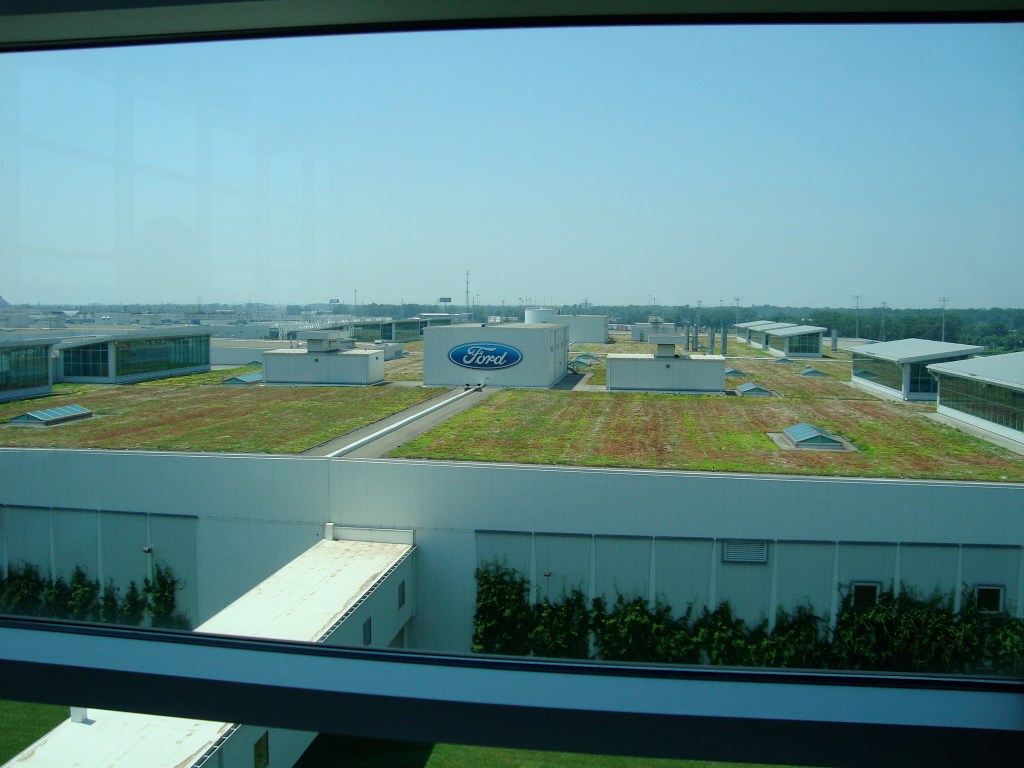
In 2010 I toured the world famous River Rouge Plant in Dearborn, Michigan, where Henry Ford perfected the type of plant that Xiamomi has brought into the twenty-first century. (The photo shows a portion of the living green roof of that miles long plant.) I was bowled over by its orderly cleanliness. Line workers finishing off F-150s did not have to bother with cardboard from shipped components because they came in on racks in precise order. Work was at waist level. None of the manufacturing plants I have worked in were at all similar.
That future was then but now China is without peer in most manufacturing. More and more I consider Made in China labels as a sign of quality, though my wife can remember when I dared her to purchase a Made in China item for me. I have nearly given up on looking for Made in America labels.
I think I know why the shift to China took place: we Americans loved Walmart to death and they moved sourcing to China to supply our cheap wants. Amazon followed. Other than cranky old guys like me, most consumers do not even consider manufacturing origin.
What I have a hard time with is the speed of China’s rise. My ping-pong playing friend grew up in rural China in a village without regular electricity. “I love your radio collection,” Aiping remarked more than once as she was beating me on my own table while looking at the old transistor radios I had on display atop my book shelf. She fondly remembered her family’s sole radio which she listened to as a way into the outside world. Her radio, like my old transistors from the 1960s, was a prized possession.
The speed of change in China during this young woman’s lifetime makes me want to know how her former country–she is now a U.S. citizen and CPA–achieved its advancement. I marvel at the progress and reflect on why my country is taking giant strides backwards embracing fat SUV’s that further heat the atmosphere. Just this week President Trump has made a deal with a shaky middleman to claim part of Venezuela’s oil using my tax dollars on fossil fuel for our increasingly fossilized country and pushed us further into an oil war in the Strait of Hormuz.
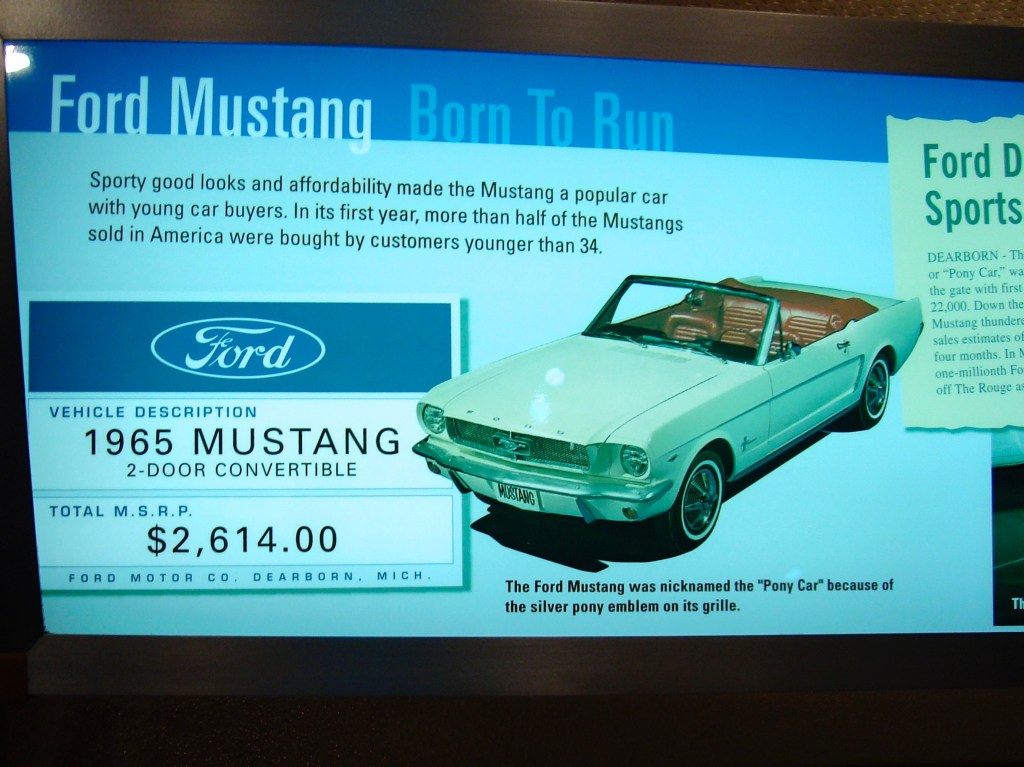
In 1965 Ford’s River Ruge Plant built Mustangs. They managed to make the Ford Falcon economy car into a new form that attracted the emerging youth market. Can we get back to looking forward again? Can we build houses for our citizens? Can we attract young scientists again?
Don’t get me wrong. Current times indicate to me what an authoritarian state feels like. I do not like the time we are living in. I do not hanker for a Trump authoritarian state to seize more power and imitate China in that way, but China does has a vision and central planning that aims to embrace the future. Until this century America was always looking ahead by welcoming new ideas and new citizens. My feet point forward. Stepping backwards challenges my equilibrium.
Mao Zedong took over China just before I was born in 1948. He led a great the Great Leap Forward at about the time I graduated from high school in 1967. That cultural revolution was actually an anti-science, anti-modern, anti-historical, and anti-intellectual move backwards that costs the lives of tens of millions. Aiping’s parents survived it by eating grass, insects, and bark. I worry that our times contain seeds of the same misconception about ignoring progress.
Despite that giant step backwards, China made looking toward the future a focus about the time I graduated from the University of South Carolina in 1971. In my working adulthood this former backwards country has come to point of eclipsing my own.
The more I ride along with Noraly Shumaker and read pieces like Osnos’s the more I hanker for a vision that embraces the future and works collectively to solve the problems it brings. My “visits” to clean, bright, advanced China fascinate me and leave me hoping that my country will see a future beyond that of the petrol state President Trump is so proudly leading us into as the planet Earth heats up from emissions.

