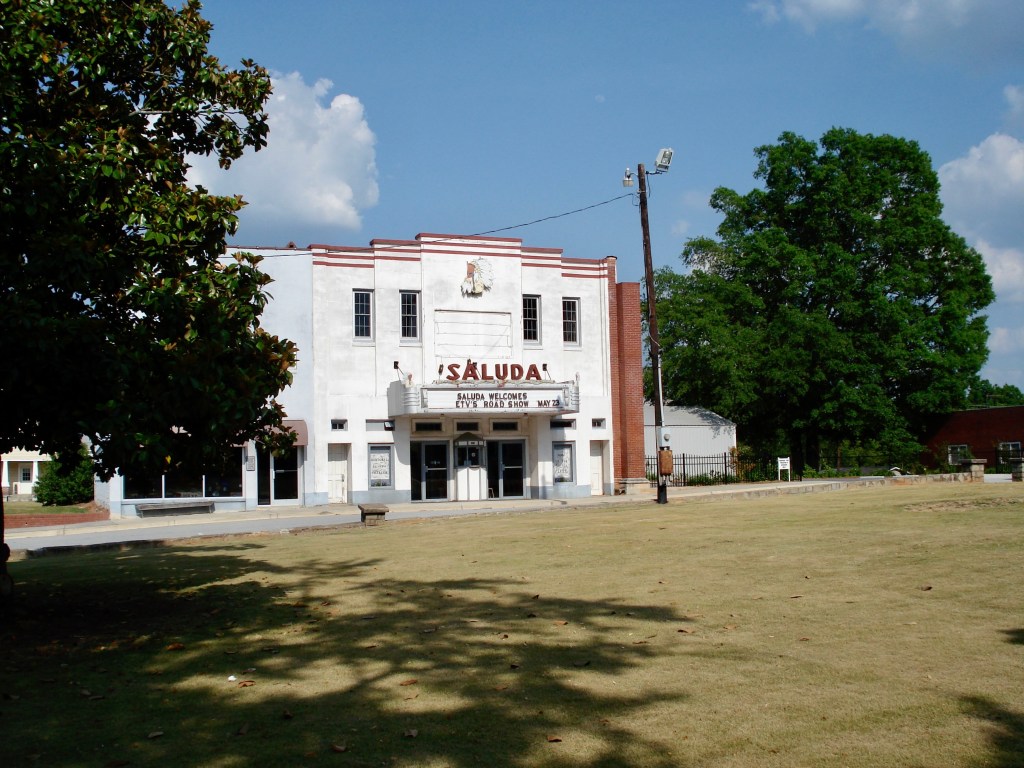
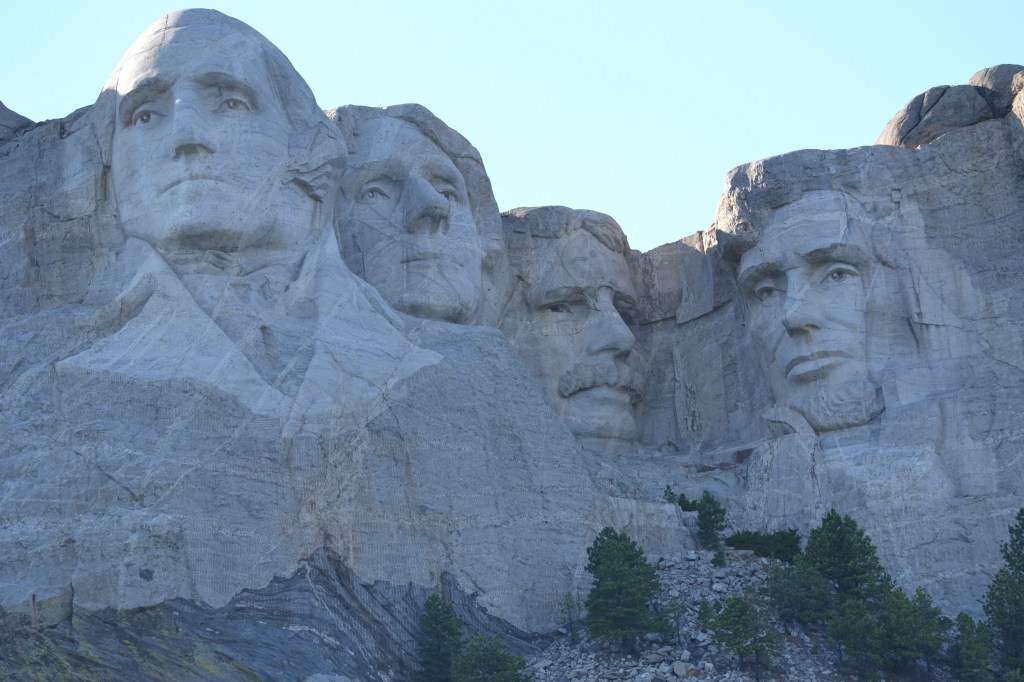
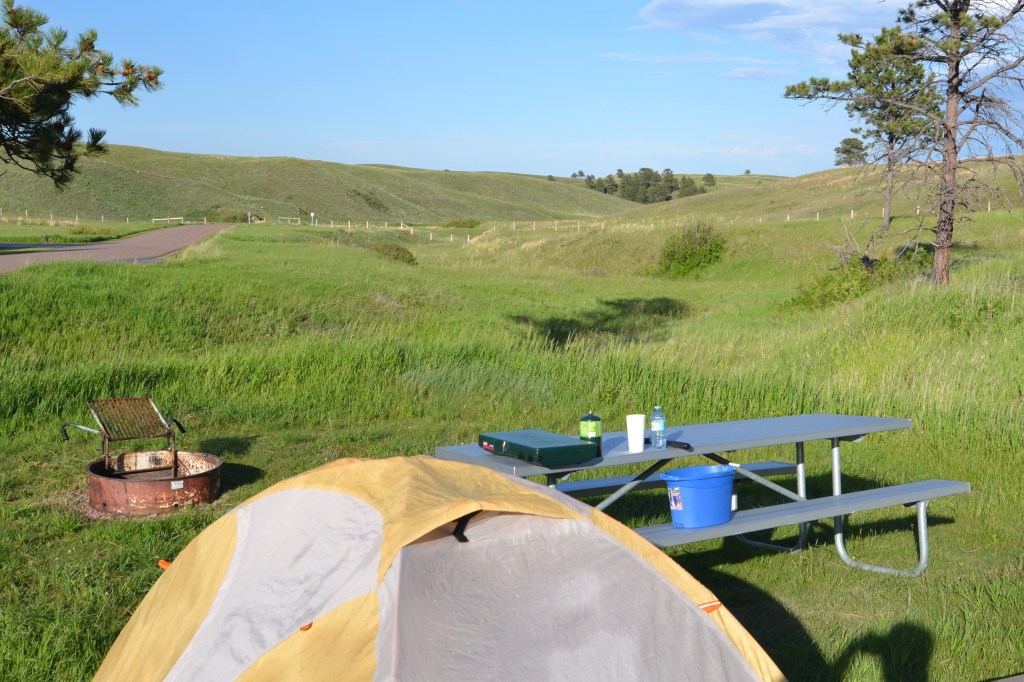
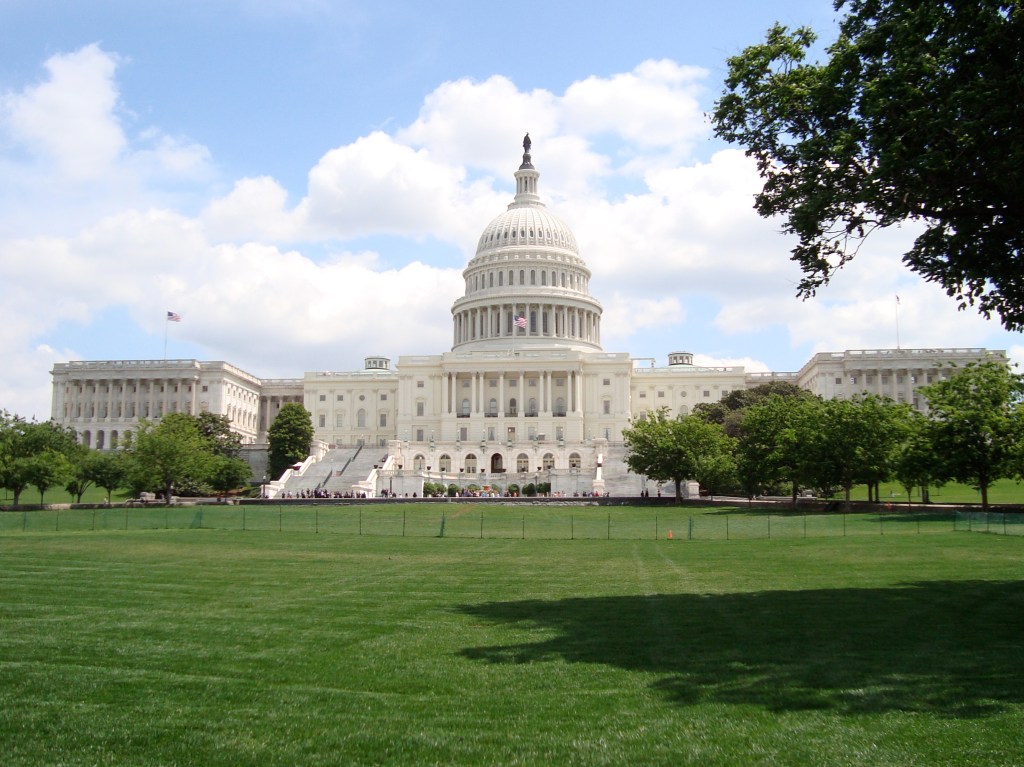
Until recently I would have responded “The United States of America” in an eye blink. I am the son of a WW II veteran and a veteran myself. Born in the late 1940s, I imbibed patriotism from the very air that surrounded me in small town Saluda. As a boy I recall poking poppies in my button holes on Memorial Day and feeling quite proud.
I read the American Legion Magazine and remember the politicians of the day speaking to audiences with rhetoric soaked in the red, white, and blue. William Jennings Bryan Dorn and Strom Thurmond bounced their words about patriots and the communist menace off my ears in person.
My patriotism expanded seeing the success of the Civil Rights campaign. I got it. We are a country that values democracy and fair play. Ironically it deepened during the Vietnam War era, despite Nixon’s prolongation of the conflict. His promise to end the war was hollow but American protest ended the war. Democracy worked. LBJ pushed through laws guaranteeing Civil Rights. I loved America with my teenage soul.
My country the greatest clung to me. One of the most profound joys of my life was to retire from my regular work after 34 years and fall into idea of camping in every state. I have slept on the ground of 47, most more than once. I have visited most of America’s national parks and know her beauty and grandeur first hand. Reading books about the Civil War and Truman or Hoover would send me on history camping expeditions to walk its battlefields and see where Presidents grew up.
I have gone volcano camping in the West and traced the Nachez Trail and followed the Mississippi from its humble creek bed origins in Minnesota to New Oreleans on various camping trips. The majority of the time I put my tent on pads in parks designed and built by the CCC during FDR’s Presidency. America’s parks are proof of it greatness and a permanent testament to its citizens hard labor.
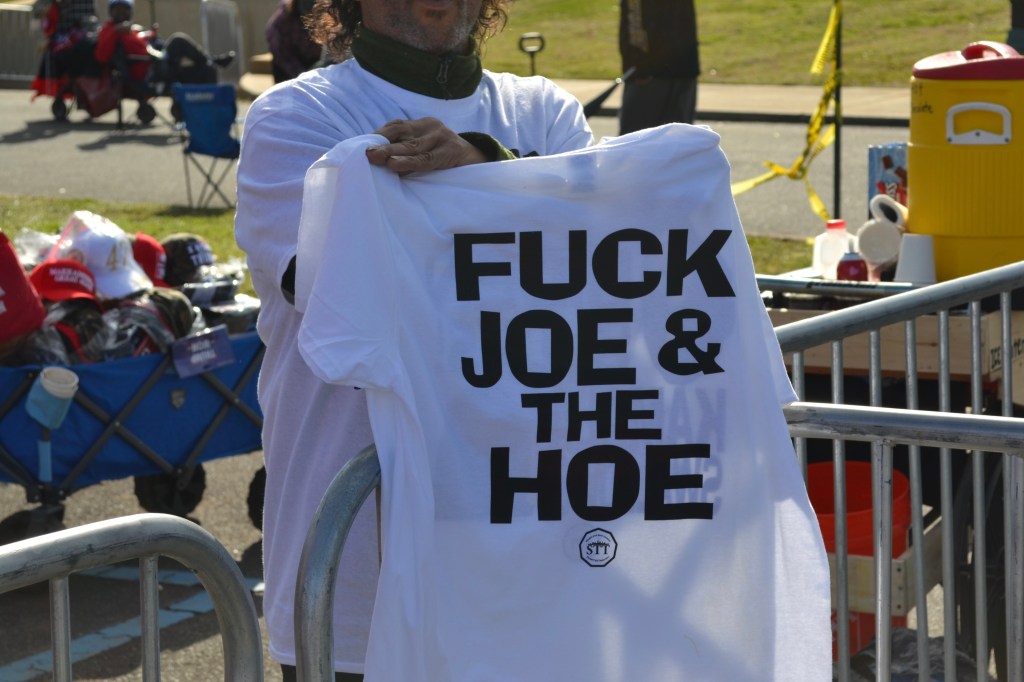
The re-election of former President Trump jolted me. My off and on melancholy turned to border-line depression. I do not mind the rise of mercurial extreme rightwing politics so much as I hate Trump for instigating an insurrection and denying his loss to Biden. Trump has changed America and me by fomenting, directing, and instigating an attack on the seat of government for all of us to see on TV. His supporters damn near killed Vice President Pence and one of them took time to drop his pants to defecate on the Speaker of the House’s desk.
Call it a slow-developing epiphany. I came to realize that my love for America needed to re-examined. I have taken my love for her off the shining top shelf. She is still high up, especially the idea of her as a location for immigrants–we are all immigrants–who come to the land of opportunity and literally constitute the nation’s motto: E Pluribus Unum.
Never before have we had citizens anxious to show fealty to a would-be dictator/king. I have seen him in person at rallies belittling others. His junior high school bully boy style has created more cliques than I ever saw in my years of overseeing children in hallways and cafeterias. Who would have ever thought that a former President’s name-calling would come to be adored? I accept his election but disdain his divisiveness.
The “out of many, one” notion is under attack by dark forces that do not respect others. Recent news of Trump’s purposeful nomination of cabinet officers who do not have the credentials that required to do their jobs is disturbing as is their complete fealty to Trump which seems to supersede their loyalty to the Constitution.
All of President Biden’s cabinet has remained intact, even though some of them have told hard truths to Biden. All of Trump’s former cabinet changed over time again and again in the span of his first tumultuous term; he had five Secretary of Defenses. He proudly, publicly proclaimed that he was smarter than the military’s leaders.
We could be in for a very destabilizing time which would delight Trump and Musk and the other billionaires who have coalesced around the incoming administration. I think the instability could cut the legs off our democracy as it currently functions. A type of autocracy could develop.
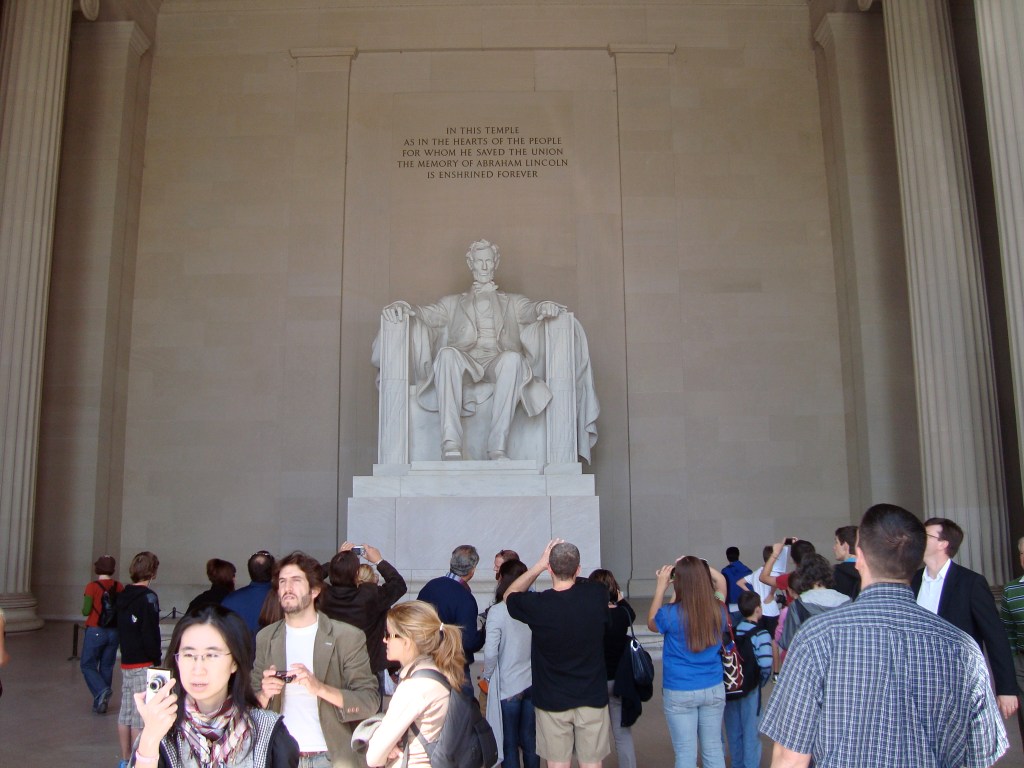
We will see but I feel calmer now with my epiphany. America is a mighty country, a good country, but it is obsessed with division, not unity. The super rich and powerful are in ascendence; MAGA Trump tribalism is all the rage. I am still an American but I am not a proud American who automatically thinks his country the best. Its very union is threatened but the memory of Lincoln remains as an inspiration we came come back to.
If George W. Bush, John McCain, Mitt Romney, or Liz Cheney were elected to serve beginning in 2025, I would not be happy but I would be reasonably sanguine. I had respect for the Republican Party before MAGA: it represented classic conservative values just as most Democrats represent progressive values.
I am a moderate who has voted for Republican and Independent candidates, though I am more progressive than conservative by far in today’s world. I took the Civil Rights struggle to heart in my youth and consider myself an environmentalist. I will die thinking that public schools that bring all of us together is one of America’s best inventions.
In factual, verifiable terms Donald Trump is a man of bad character who instigated an attack on the Capitol creating millions of dollars worth of damage and killing several people. He was twice impeached. He is a convicted felon. In the closing days of his recent campaign he joked that a bullet might find a way through protective glass toward him but would likely kill a member of the press, which he suggested would be a good idea. He talked about Arnold Palmer’s genitalia in a campaign appearance. That he said and did all of this is public record as is his insult of war hero John McCain and his recorded interview proclaiming that he could touch women at will.
The leader of a country is the symbol of the entire country. To the world at large Trump is America. We now have a strong man leader like Putin of Russia. Sure, theoretically he is more restrained than Putin but he is our American Putin. “Work hard, be of good moral character, and tell the truth, and you can grow up to become President” is out the window. Trump is a refutation of Washington, Lincoln, FDR, Kennedy, and Reagan. He dirties the office he holds.
NYC ran out of places to park refrigerated trailers to store deceased COVID victims. Trump presided over the epidemic often shouting down the country’s scientific advisors. He did despatch a Navy hospital ship to New York’s harbor. His voters forgot the seriousness of the epidemic and the world-wide economic downturn that it precipitated. Broken supply chains take time to reform.
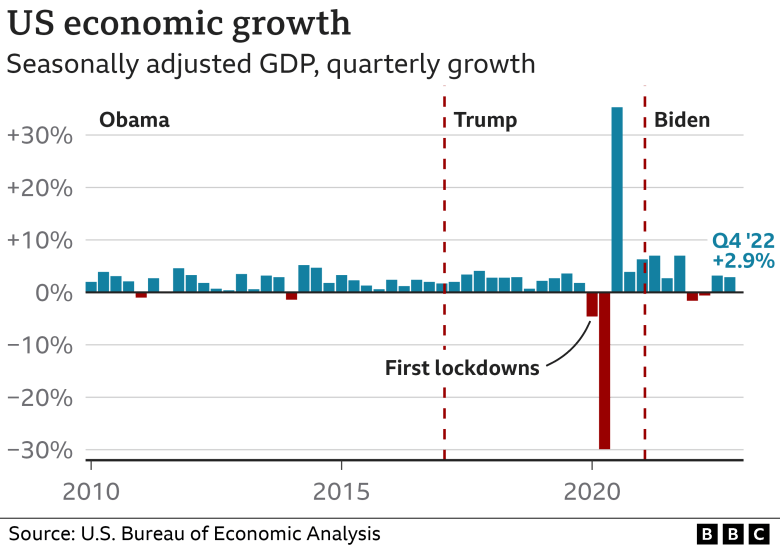
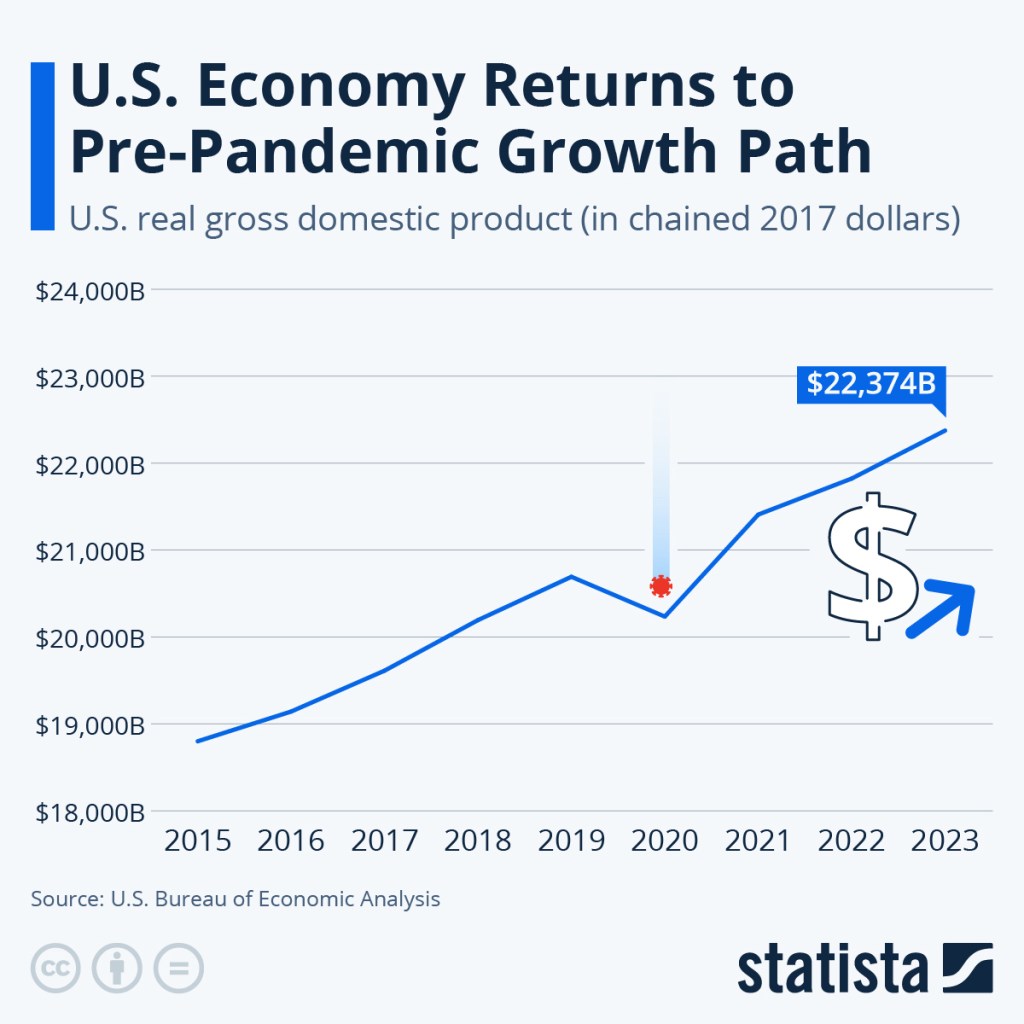
The Biden administration spent big to revive the Trump economy they inherited at the end of January 2020: the Democrats pushed through the infrastructure projects that Trump promised but never delivered on. The Biden administration also brought back advanced chip factories to U.S. shores. The consensus of economists is that the spending initiatives spared us from a recession.
Steady economic growth has exacerbated one of our country’s fundamental problems. We are short on workers. The approximately 14 million illegal migrants in our country clean our hotel rooms, install shingles on our roofs, cut our meat, care for our sick, and pick our produce. American business brought them here and depends on them.
The Biden administration capitulated and Democrats voted for new border controls as per Republican leadership’s wishes. Trump vetoed the vote on the bi-partisan bill to help his candidacy. He needs to keep the border controversy alive to stoke controversy.
In my mind Trump won because most of his followers are low on information. Truth Social, X, and Fox are organs for spin, lies, and propaganda. Outside of those three media players, all other sources are considered “main stream” thus unworthy because they put objectivity over Trump worship.
I am a citizen. Of course, I hope the Trump administration is successful. It could be if he shelved his bully/ insult artist act for policy debates followed by Congressional votes. Maybe we should discard free trade and put tariffs on imports. I would love to see that idea debated in a way that could win me over. Perhaps we should use the nation’s police forces and military go door to door/ business to business to root out the aliens. Put the plan in the form of a bill and hold a vote. Perhaps we should discard health care access achieved by Obamacare. I would love to read the text of Trump’s plan.
Cut taxes further for the the richest; a trickle down could help the middle class this time. Discard the environmental initiatives to reduce carbon pollution. Maybe we are silly for considering environmental stewardship. Perhaps NATO is not worth the effort and Putin should be allowed to take neighboring countries.
I want to see all of this that I have heard Trump propose but I want to see it in the form of legislative debate that puts the ideas clearly before the voters who think they want such initiatives. He should encourage public Congressional debate as did LBJ in my youth who put this great question before the people: “Should we maintain segregation and unequal treatment or integrate to make all citizens equal?” I remember that contentious debate well that moderates and progressives won in the time when America was not great.
Putting something in writing seems to have helped me with my frustration. I am aiming to be a cooperative “elite” and see what billionaires Trump and Musk have in store for us. We will have an exciting four years of rule by Trump from his mansions and golf courses. He has the right to rule because he won. The majority should rule.
The forty-seventh President inherits a country that has at last ended the unnecessary war in Afghanistan, the world’s best economy, and an out-going administration that promises cooperation in the change of administrations, not insurrection. The new President should strive to leave his term with the best economy and absence of war as Joe Biden has.
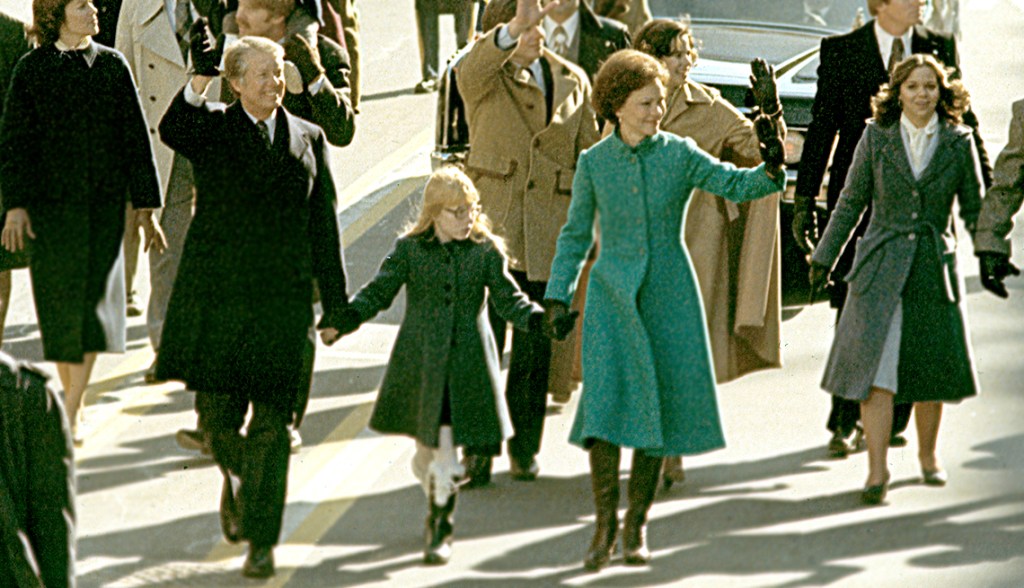
I am going to remember President Carter walking to his inauguration every time I hear people like me called elites by the elites just elected. Doing so helps my blood pressure.
memorable inauguration moments – Jimmy Carter, in 1977, walked the inauguration parade route from the Capitol to the White House
Noraly Schoenmaker is a thirty-five-year-old Dutch geologist who quit her regular work to live wherever her dual sport motorcycle is. I watched her ride from the tip of South American to Prudhoe Bay, Alaska, and became a fan. She disdains cities and pavement. She rides mainly on dirt. In Season 7 of Itchy Boots (YouTube) Noraly is in northern Africa riding in the Sahara.
Why do I like her vlogs so much? Part of my affection is her relentless upbeat personality, part of it is the places, and part of it is her encounters with regular folks. Last night I saw her sleeping by her out-of-order Honda 300 beside a railroad track in Mauritania in the desolate Sahara. She called Ahmed, a Mauritanian whom she just happened to encounter to help her with a motorcycle problem. Her casual acquaintance was driving seven hours to help her, of course, without a thought, because that is what good people do and the world is full of good people.
I have tent-camped in 47 states and want to think back to some people and places a la Itchy Boots style to remember little scenes that just pop into my head at times. I thought I would start with a Dutchman I met in Virginia.
Loft Mountain
lies along Skyland Drive Parkway in Shenandoah National Park in Virginia and is an extension of the Blue Ridge Parkway. About midway along Skyland Drive (not too far from Washington, DC), Loft Mountain Campground sits on the crest of a mountain with sheer drop-offs and lies across from the biggest natural bald I have ever seen.
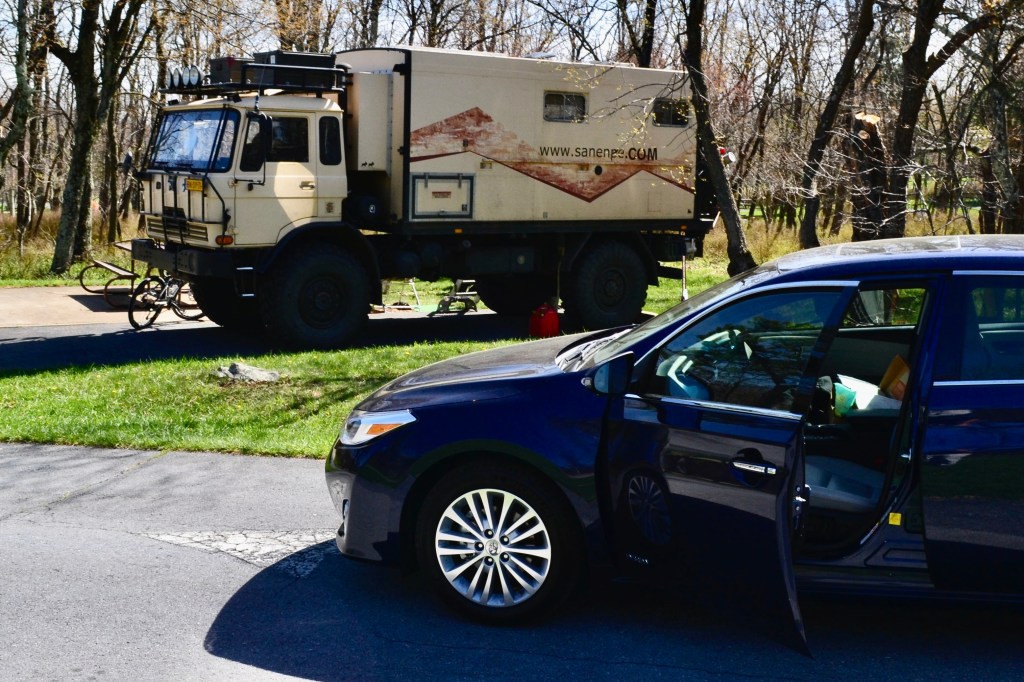
I remember the wind making my tent fly like a kite and paying quarters to take a shower but what sticks most is a Dutchman in a decommissioned NATO truck. He was about Noraly’s age and had started his adventure with shipping his camper to Canada and was working his way through the US on the way to Mexico.
Struggling a bit with his Dutch-accented English, I talked to him until someone needed to maneuver around me. He was relaxed and enjoying his voyage through America and was glad to discuss his unusual vehicle, a one-off of his own design. I wish I had gone back as per his invitation to look him up again to understand more about his voyage through North America.
Black Canyon of the Gunnison
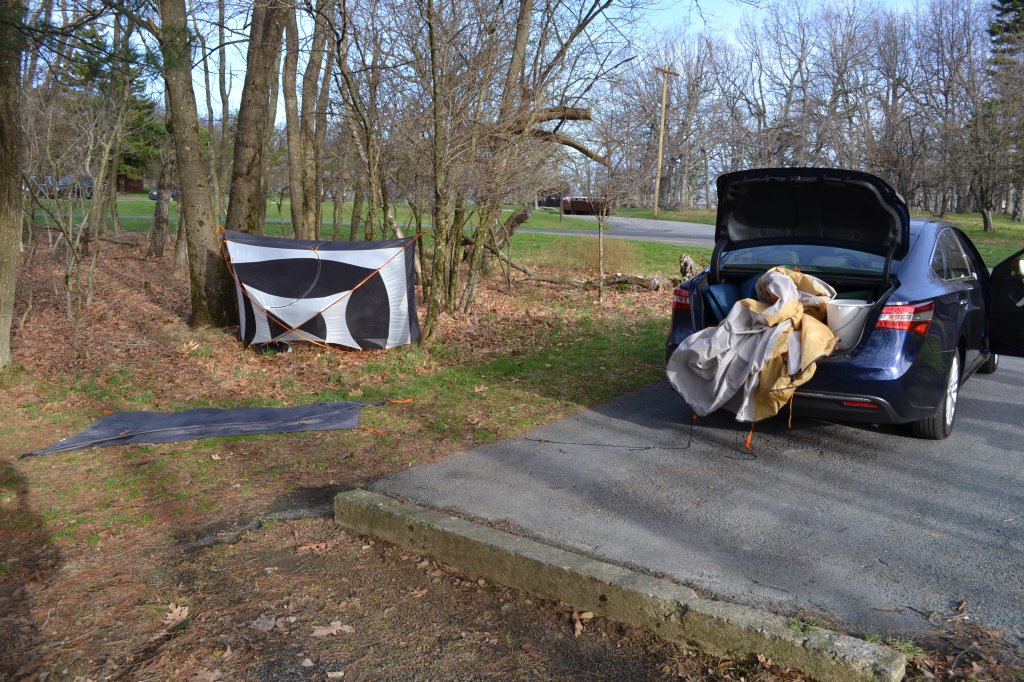
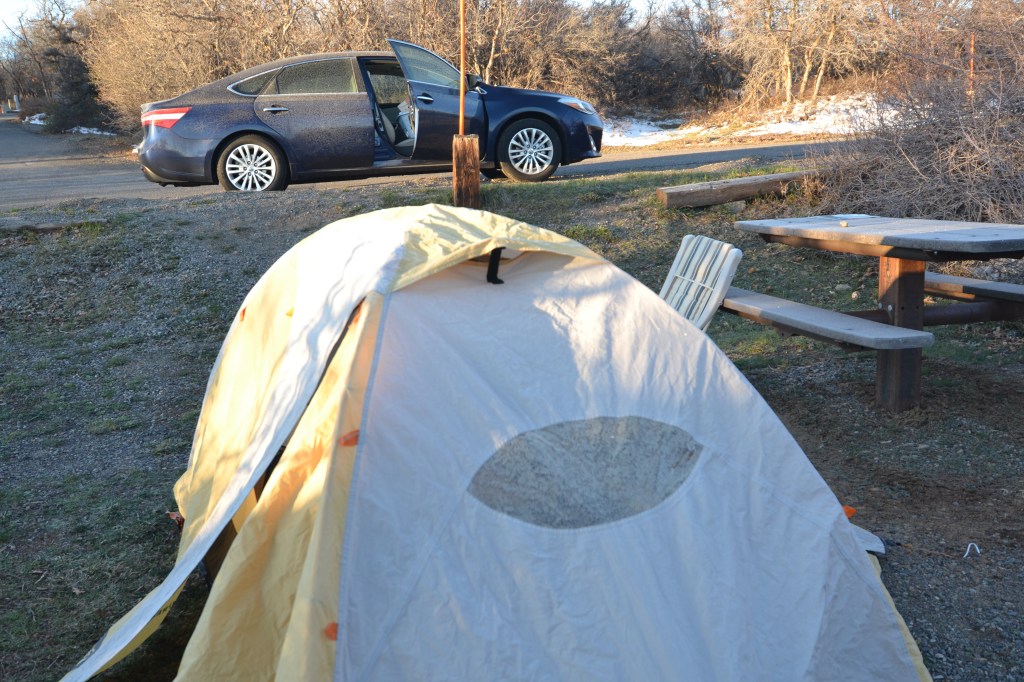
is where I met a recently laid off programmer who one of just three campers in April of 2014 when I put my tent down. He caught my eye because he was driving a new silver Chevy Volt. I was in my nearly new Toyota hybrid. We talked cars, weather, and jobs.
He was not all bummed out about his layoff because he had good contacts, was single, and had decided to drive around the country some himself before going back to work. The weather was topic #1: we had a light skiff of snow and a low around zero. I remember using my Coleman stove to heat ice from bottles of water in my trunk that had frozen solid. I had to use my pocket knife to remove the frozen contents in order to turn the ice in coffee.
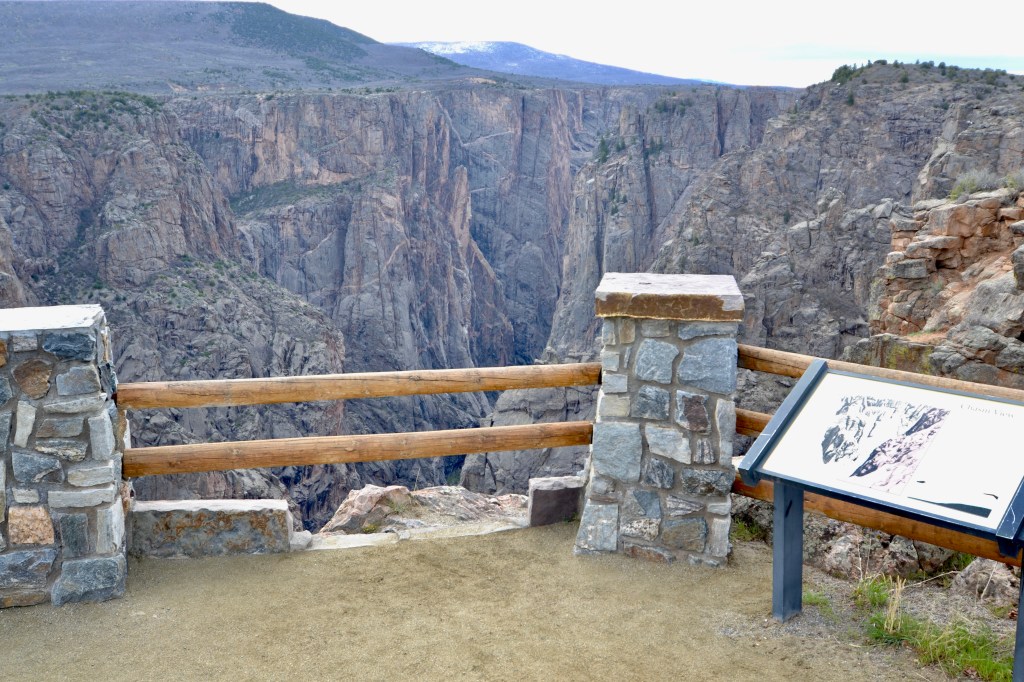
I suppose the cold is what etched the memory but the beauty of Black Canyon of the Gunnison is striking for its blackness. The rock is closer to pure black than gray and the canyon walls can be traced down to a black river. I learned that one wool blanket and two sleeping bags are not enough; I now take two wool blankets when I camp in high places.
Sam Solomon Springs at Balmorhea Springs State Park
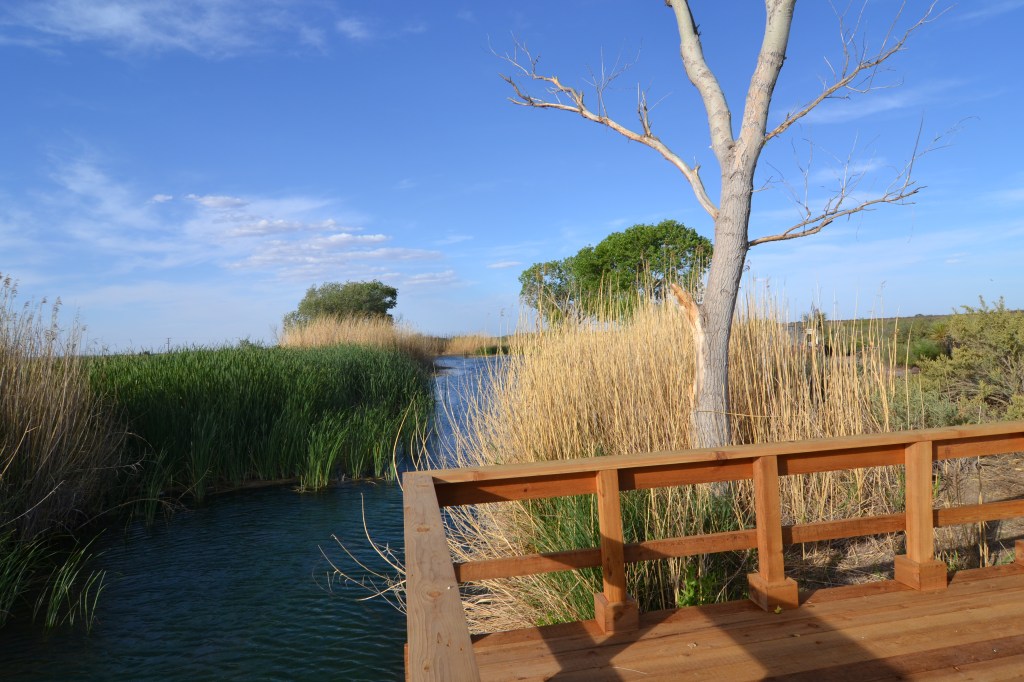
is in the desert of northwestern Texas on the way to El Paso and Ciudad Juarez not many miles off I-10. I lucked into a camping spot via a ranger who respected my tent camping. I could see campers all around as there was little cover and worried a bit about the cluster of fifth wheel campers at the edge of the campground. They were young, sociable and played music loud. A desert party seemed to be forming.
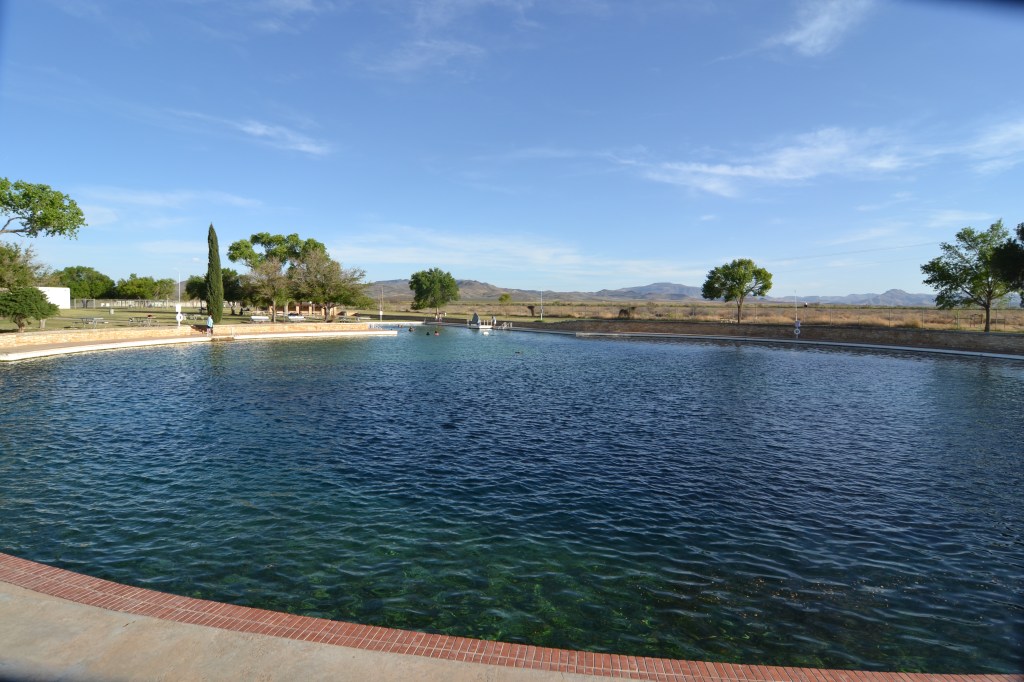
I took off to explore and found signs about the willows that grew freely and the rare fish that thrived in the spring waters and came upon the biggest swimming pool I have ever seen. Like the entire campground, it was a CCC project back in the FDR administration.
The sun was on its way day signaling the sudden shift from intense heat to coldness, but I reckoned I had enough time to avail myself of the product the CCC boys’ toil. I started off attempting laps because the water was cold but soon gave up. Most of the pool was quite deep with a natural bottom. I came back to my tent at sunset and slept well that night because the fifth wheel gang decided to ditch the music for the voices of what seemed like a hundred coyotes in the distance toward Mexico.
Lovewell State Park at the Kansas-Nebraska Border
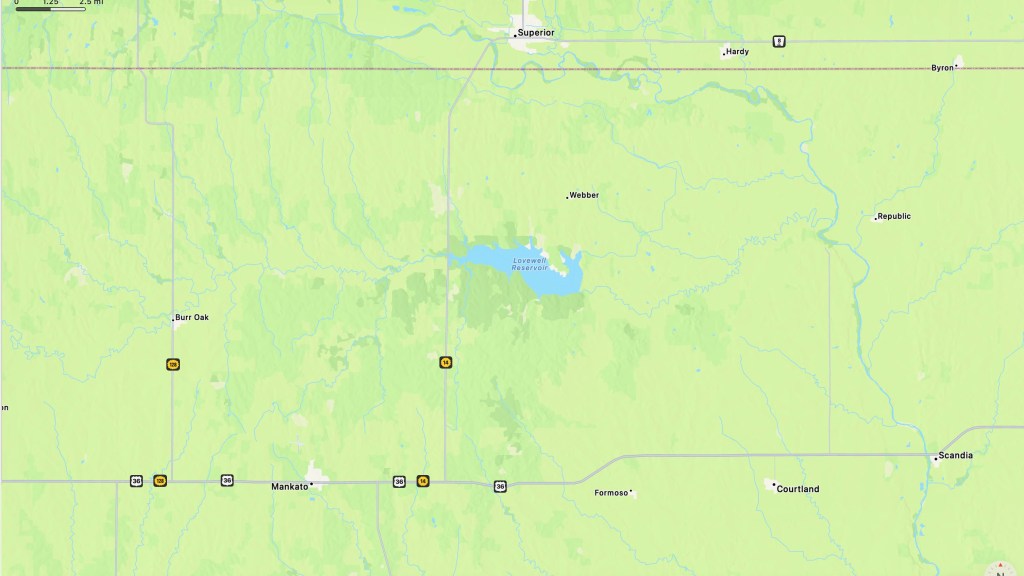
is off U.S. 36 in northern Kansas. My hatred of interstates has led me to adopt the route that connects Missouri to Colorado as an alternative to freeway lane-swapping. Because there are no big cities on the route, a driver can go for miles without seeing other vehicles. Small towns crop up every fifty miles or so, untouched by the plethora of national franchises that line the interstates. Most towns look like the fictional Mayberry of Andy Griffith show fame.
Screenshot
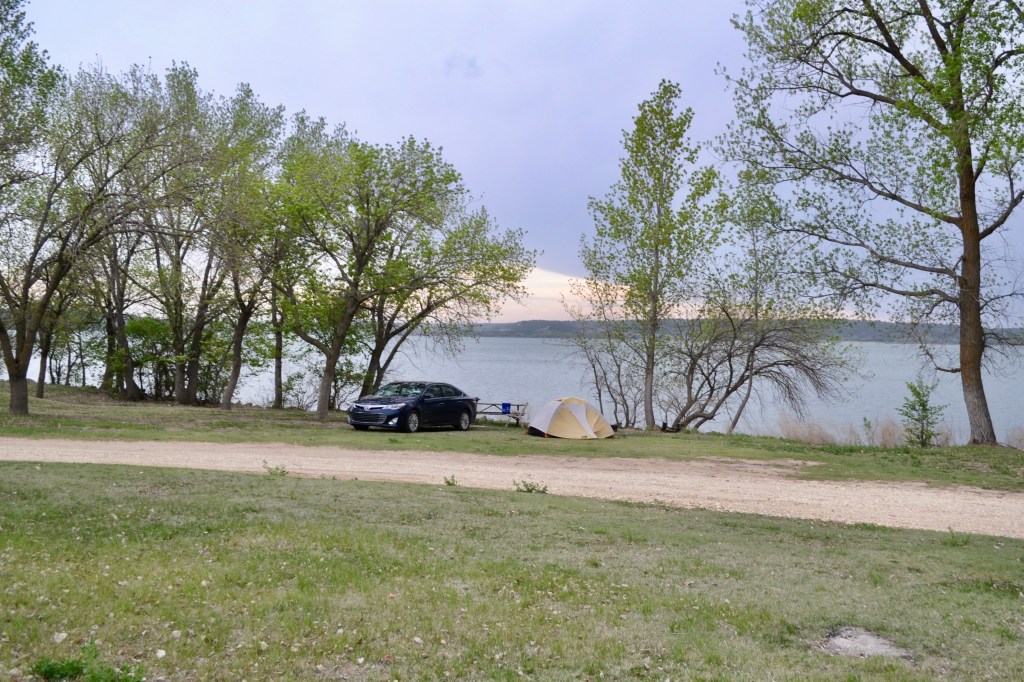
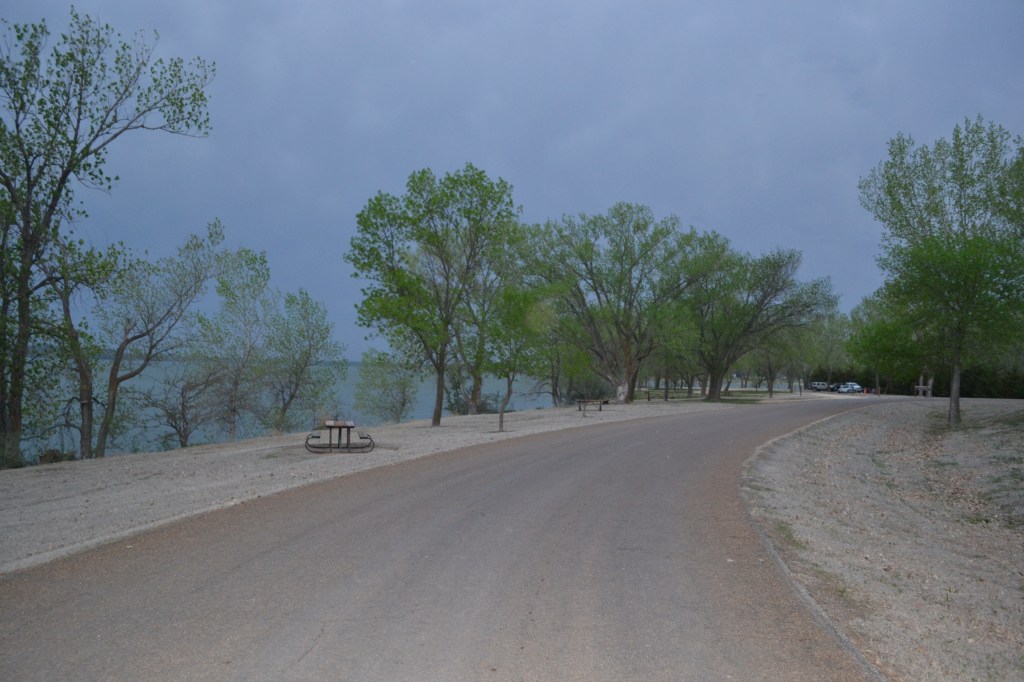
I chose Lovewell Lake State Park at 424 miles and 7 1/2 hours driving time from Black Hawk, Colorado, where I had been visiting my daughter Elle and her husband Dave. I was plenty early so I had several hours to read, write, and walk around. I could see a vast storm looking north toward Nebraska about three miles away across the lake.
As I walked around, my Colorado daughter was leaving to visit my wife in South Carolina, but her flight was re-routed well into Canada to escape the storm I was to experience. At the time I did not know the size of the storm which made regional headlines.
I added four stakes to the first four that held my REI tent in place as a precaution. Have I been caught in storms before? Let me count the times. Who cares?
I ducked into my tent around 8 PM to escape the first raindrops and expected, I suppose, a period of rain that would come and go as most East Coast rains do. As soon as I got inside, the wind picked up and vertical rain turned horizontal.
The first half hour was sudden fury that I had never encountered before, but I felt sure that the storm would reach its conclusion and I would survive, wet and unbroken. The second half hour saw my adrenaline-induced bravery turning to fear. The tent threatened to rise like a fat kite. Then it went flat across me and the wet contents of the interior.
I began to think about death during the second hour. The completely sideways rain had soaked nearly every inch of the interior. I became hypothermic. I shivered so much my teeth chattered. My arms ached from grasping the tent frame. Could I hold on?
I longed to release the frame given the lightening but in the puffed up periods I felt holding on was the best of two bad choices. I thought of each member of my family as a way to stay calm and thought how lucky I would feel to have chance to see each again.
Ten minutes short of the two-hour mark, I sensed the storm abating but still as intense as any storm I knew from my east coast existence. I made the choice to inch my way out without letting go of the tent. Standing upright was very difficult. I kneeled on the tent to remove some of the stakes and fly.
My equipment remained on the ground long enough for me to get to the car. My new fear was that the car door hinges would bend open too much so I kept them closed but managed to pop the trunk open.
I began to feel I could control my shivering as I worked up a little heat from my wet work. I got the now extraordinarily heavy tent and its contents in the trunk. The wind had diminished and the sideways–always sideways–rain was just drizzle now.
Shifting to the far side of the car, I found some dry clothes and a towel and got myself into the vehicle at last in a wind that still threatened to topple me. I cranked up the car and sat for a few minutes before heading out.
My Rand McNally Road Atlas and the Toyota navigation screen showed U.S. 36 tantalizing close. I decided to head east and then cut back south to it. My drive in was a good ten miles back west on a very poor remnant of a paved road.
What I noticed first was my sleek sedan was somehow going sideways south though I was moving forward. Seemed illogical. I drove on and came to an intersection that would allow me to proceed to good old paved U.S. 36 but drove on until I found yet another intersection of dirt roads that promised a shorter trek to pavement.
I had not reckoned on was what I could hear: mud caked up in layers in the fender wells that slowed the wheels down. I had determined to drive steadily without stopping to reach the bottom of the long hill that was no doubt part of the geographical dip that had allowed Lovewell Lake to form.
A hundred yards are so down the dirt road so tantalizing close to pavement, my sedan stopped going forward. I checked my watch and the clock and spoke aloud: “I can spend the rest of the night right here and walk back to the campground at daybreak.” It was already after 2 AM.
I did not sleep to speak of but took some comfort in the fact that I heard dogs barking in the distance. Everything would be ok in the morning. At around 4:30 AM I got out of the car. I struggled to keep my sandals on as I inspected my clogged wheel wells. Using a stick, I worked for a quarter of an hour or more to remove soil that seemed like ground rock on its way to becoming dirt.
I scouted the road backwards and forwards as best as possible for a few yards north and south. I decided to back up north toward Nebraska because I knew that the road I had turned off of was on higher ground. To my surprise the traction control and reverse worked on the gummy soil that was beginning to dry.
I drove back toward the campground and turned right toward what led to Webber, Kansas. Webber has a name but it is not a town, just three or four buildings, tops. I drove north some more and then turned east drove for the best part of an hour before I found a paved highway inside Nebraska that I could have gotten out and kissed.
Storms in rural Kansas and Nebraska have a width, breadth, and duration that those on the east coast lack. The scale of that storm is something I still struggle to understand.
Antelope Island State Park
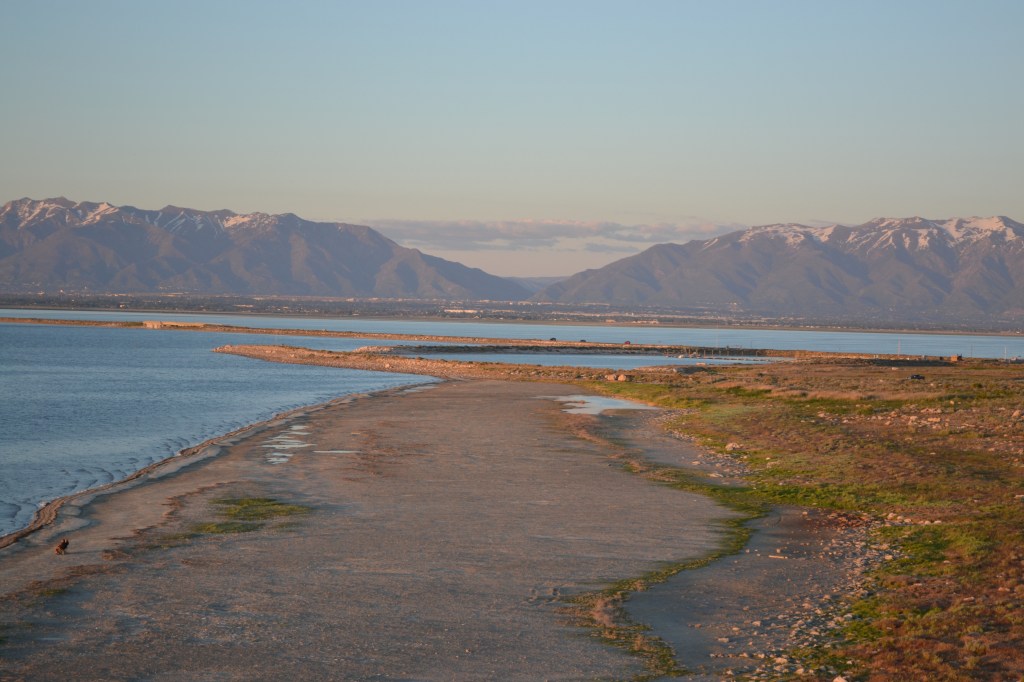
is very close to Salt Lake City, Utah, on a long island in the middle of lake which is likely to disappear soon due to a draught and over-irrigation.
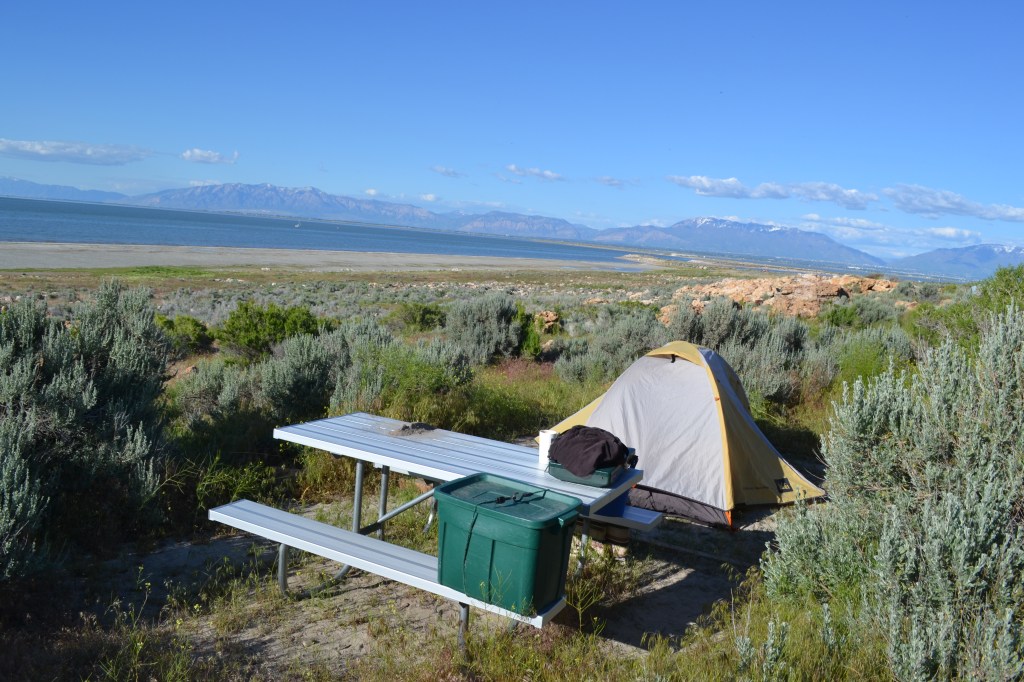
Once I toted my gear in and set up camp, I made a series of short hikes: the first to swim in the lake. I was an absolute excellent floater for the first time in my swimming life.
What amazed me most was being so close to a major city yet remote from it with sight lines to mountains twenty miles away. Toward sunset I followed well-dressed “hikers” moving up to a trail to a high point.
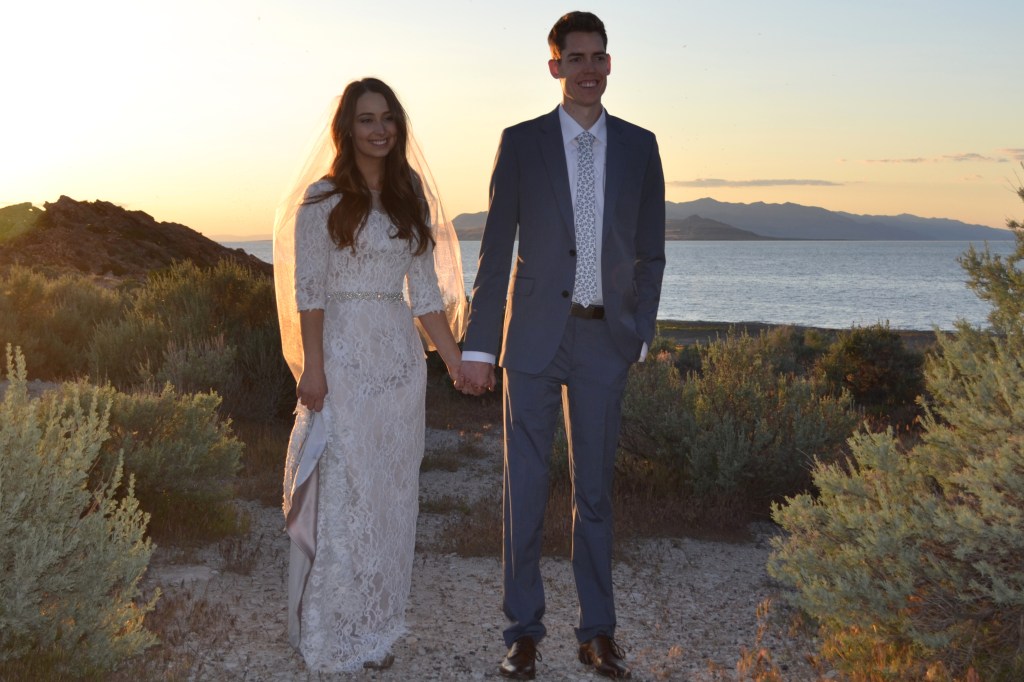
I spoke to some of the guests and did what they were doing: I photographed the beginning of the newly weds’ married life.
I remember the hiking and swimming and the vastness. Vastness is hard to come by on the east coast.
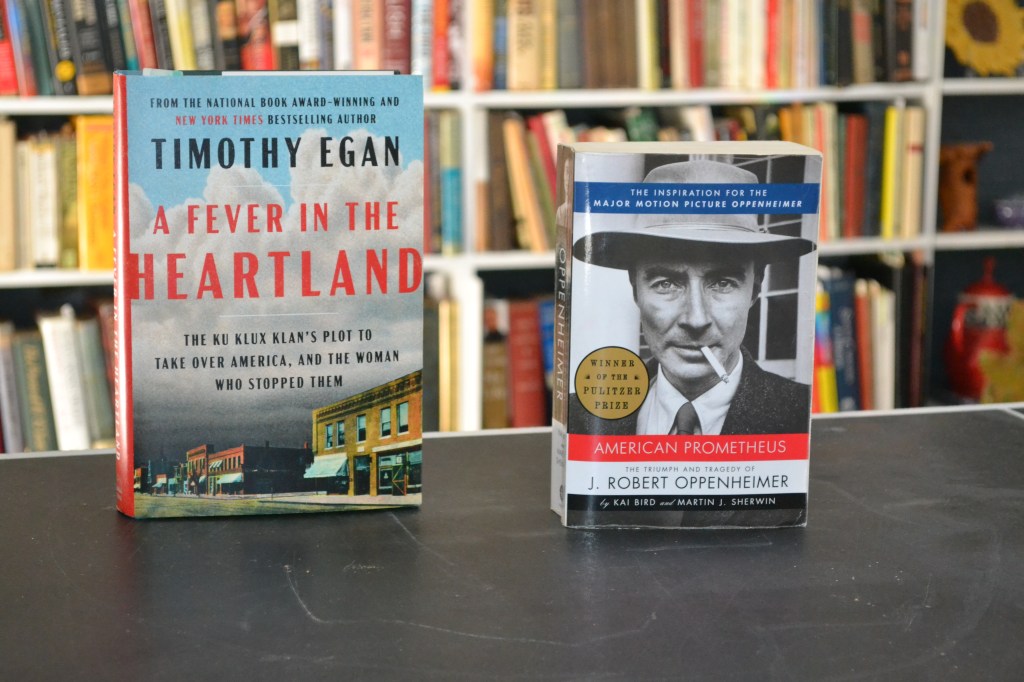
A Fever in the Heartland: The Ku Klux Klan’s Plot to Take Over America and the Woman Who Stopped It (2023) Tim Eagan
The Money Kings: The Epic Story of Jewish Immigrants Who Transformed Wall Street and ModernAmerica (2023) Daniel Schulman
Hamilton Carhartt in Rock Hill, South Carolina: Founder of Carhartt Clothing, Creator of Bob Overalls (2022) Pat Grant
Pioneer Girl: An Annotated Autobiography (2014) Laura Wilder, edited by Pamela Smith Hill
The Hundred Years War on Palestine: A History of Settler Colonialism and Resistance, 1917-2017 (2023) Rashid Khalidi
Paved Paradise: How Parking Explains the World (2023) Henry Grabar
Through the Groves (2023) Anne Hull
In a Different Key: The Story of Autism (2016) John Donovan and Caren Zucker
Wanderlust: An Eccentric Explorer, an Epic Journey, a Lost Era (2023) Reid Mitenbuler
The Color of Water (1996) James McBride
Fortune’s Bazaar: The Making of Hong Kong (2023) Vaudine England
Nine Robes: Inside the Supreme Court’s Drive to the Right and Its Historic Consequences (2023) Joan Biskupic
Charleston: Race, Water, and the Coming Storm (2023) Susan Crawford
American Prometheus: The Triumph and Tragedy of J. Robert Oppenheimer (2006) Kai Bird and Martin J. Sherwin
The Days of the French Revolution (1980) Christopher Hibbert
Master Slave Husband Wife: An Epic Journey from Slavery to Freedom (2023) Ilyon Woo
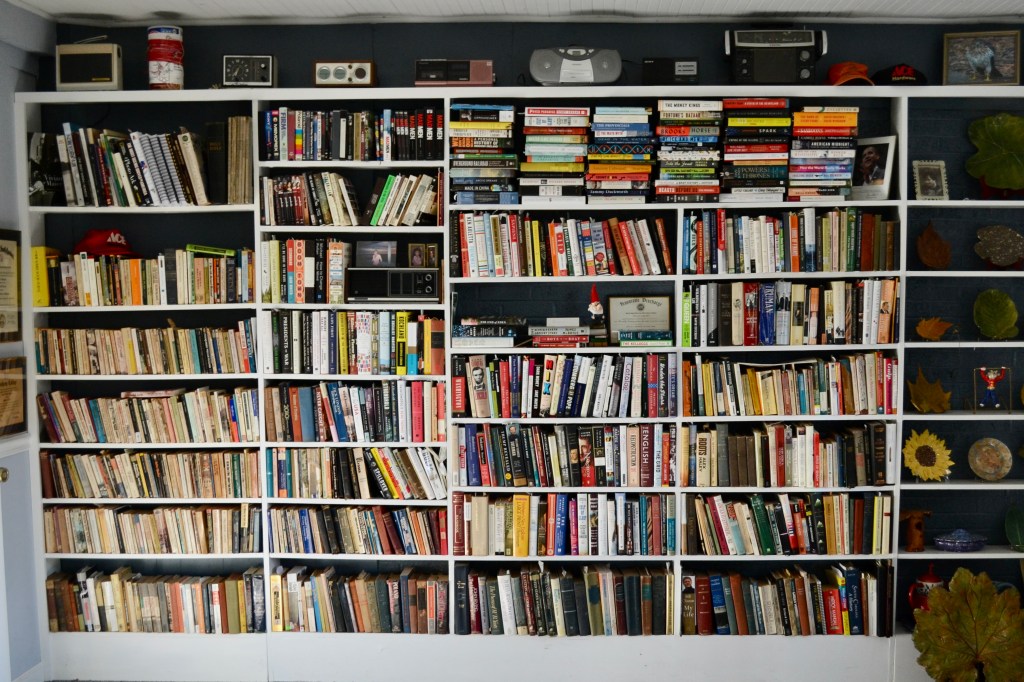
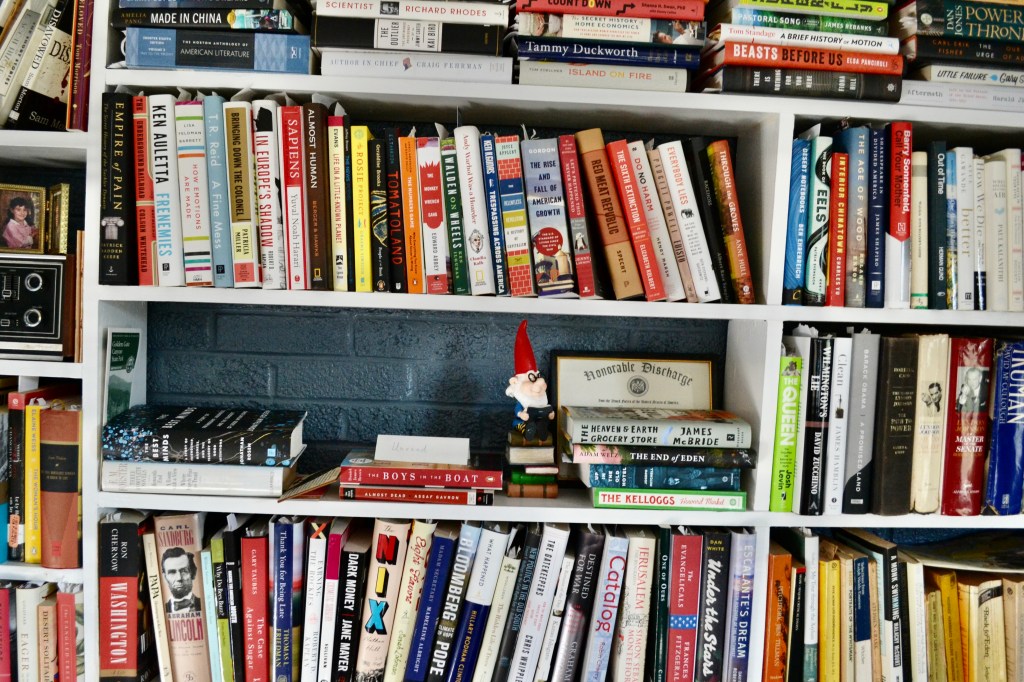
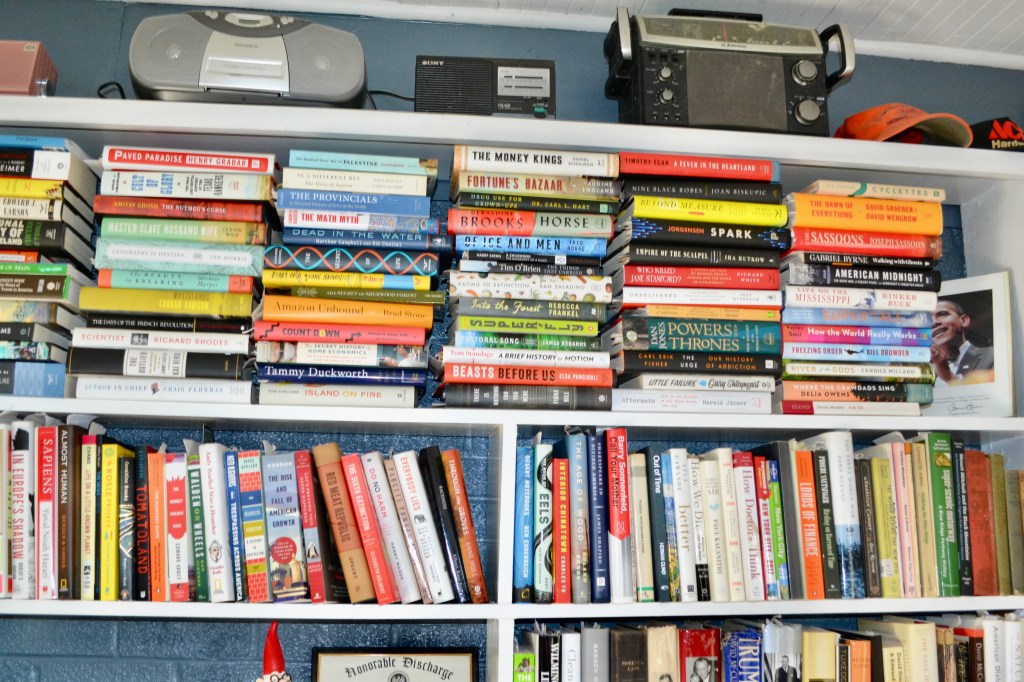
are from my 2024 Reading Record and 2023 Reading Record. I read two or three books per month and write about each book. Sometimes I get carried away and write the rough draft of what could make a decent essay that runs several pages; mostly I put together six to ten paragraphs that allow me to consolidate my thoughts on what I have read.
To me each book represents a long private conversation that I have spent weeks engaging in. No one hears me but me. I sometimes break up the “not hearing” problem by reading excerpts to my wife but she is usually reading her own book and rarely follows in my reading footsteps. I write to interact in a way that helps me refine what I thought and to remember.
I am a reading snob: what I read must be a seriously reviewed book that has won some acclaim. I used to read more fiction. Since I retired in 2006, I have concentrated on history and science. I read to engage with the world, not escape from it.
The Indiana KKK dominated America in the 1920s, surpassing the Atlanta-based southern wing of the organization, and drawing in nearly half of its white Anglo-Protestant residents. Women and children had their own special divisions and high school yearbooks of the era feature photos of students in robes. Colorado and Oregon had large KKK presences, too.
The mass of Italian, Irish, and Eastern European immigrants in and around WW I created worry over “the other” that Klan organizers exploited. State and local governments in Indiana were part of a political machine that the KKK ruled. A Fever in the Heartland did what I look for a book: it scrambled my brain and challenged my incomplete knowledge. It troubled me. I am taking my respect for midwestern wholesomeness and virtue off the top shelf.
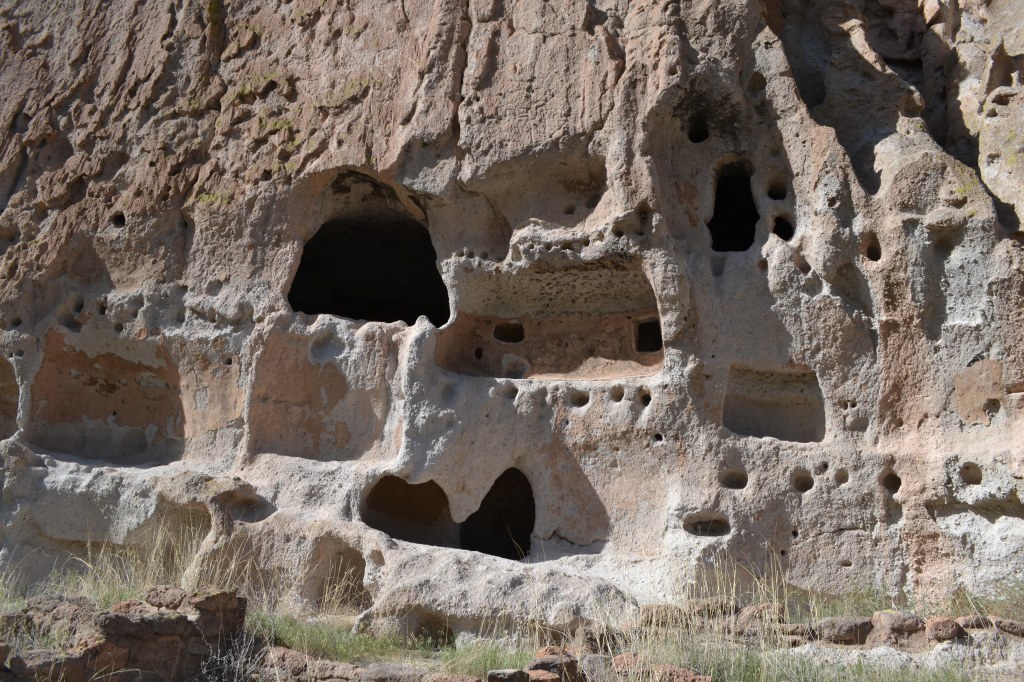
American Prometheus took me to Los Alamos National Laboratory near Santa Fe, New Mexico. Robert Oppenheimer and his crew of scientists reinvented the modern world there by taking the atomic genie out of its vase. Oppenheimer loved the then remote area and did his thinking atop a horse there across a dry mountainous landscape that includes ruins of Ancestral Puebloans’ civilization that date to around 1100.
He would have seen these dwelling places. I have camped a couple of miles above them two times in Bandelier National Monument. My camping preceded my reading of Kai Bird and Martin J. Sherwin’s absolutely masterful American Prometheus.
Hiking and camping on part of the setting of the book–Bandelier lies within the atomic laboratory tract–is what I call history camping. I have set out through the years to visit book sites, starting with books I had read about the Civil War. The combination of mental (reading) and physical (camping) is often more than 1 + 1 = 2. The spirit of the place seems to overtake me. Something ineffable happens, creating an experience that is more than two inputs.
When I taught English at Northwestern High School, I used to put a sketch of two concentric circles on the chalk board: the first circle was the student before reading a work of classic literature that they were required to interrogate and write about. The second outer circle was the student post reading. Worthy reading enlarges.
Like the growth rings revealed in a fallen tree, I have a heap of circles that have made me a bigger human. I seek the bigness that shows me my smallness relative to vast universe that I am so curious about.
At the top of danielforrest.org adjacent to Home, I explain my purpose in creating a written record of some of what I think may be of interest after I am dead and to me in the meantime as my memory fades. I also write because I think I am more myself in written words than in conversation and as I kind of therapy, a way to use my mind. A random survey of people who know me or who have seen me in passing would mention something like “oh, the guy on the bicycle.”
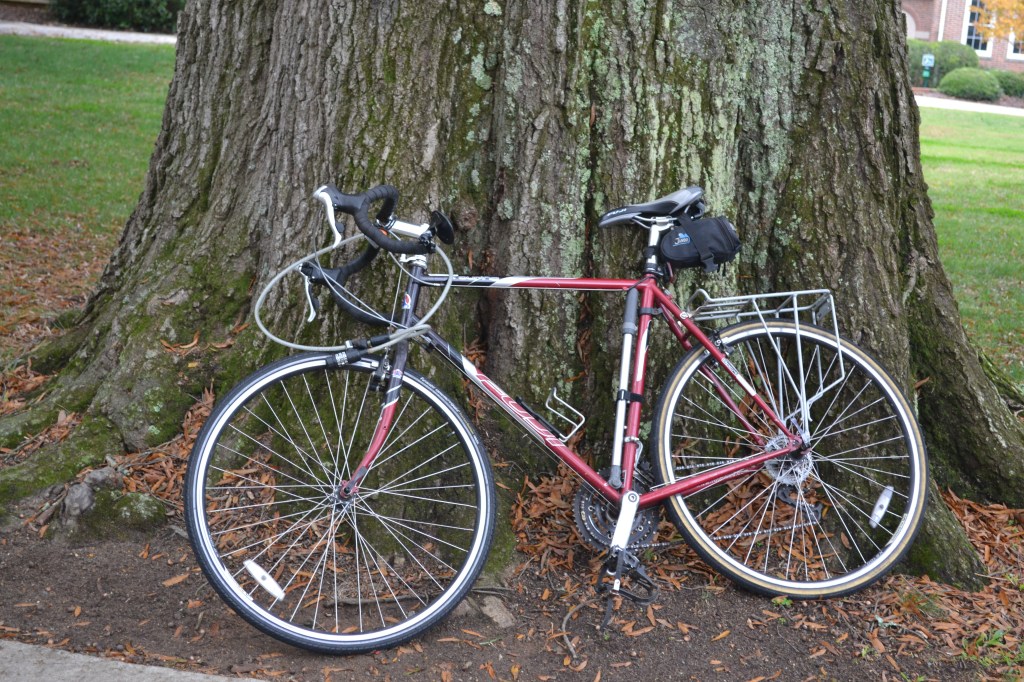
At 75 I still ride a bicycle but not to the top of Mount Mitchell anymore. I hop on my old Fuji road bike to visit grocery stores mainly. During the COVID crisis I toured York County to photograph parks (dmforrest.smugmug.com). Part of me and my personal oddity is linked to bicycles.
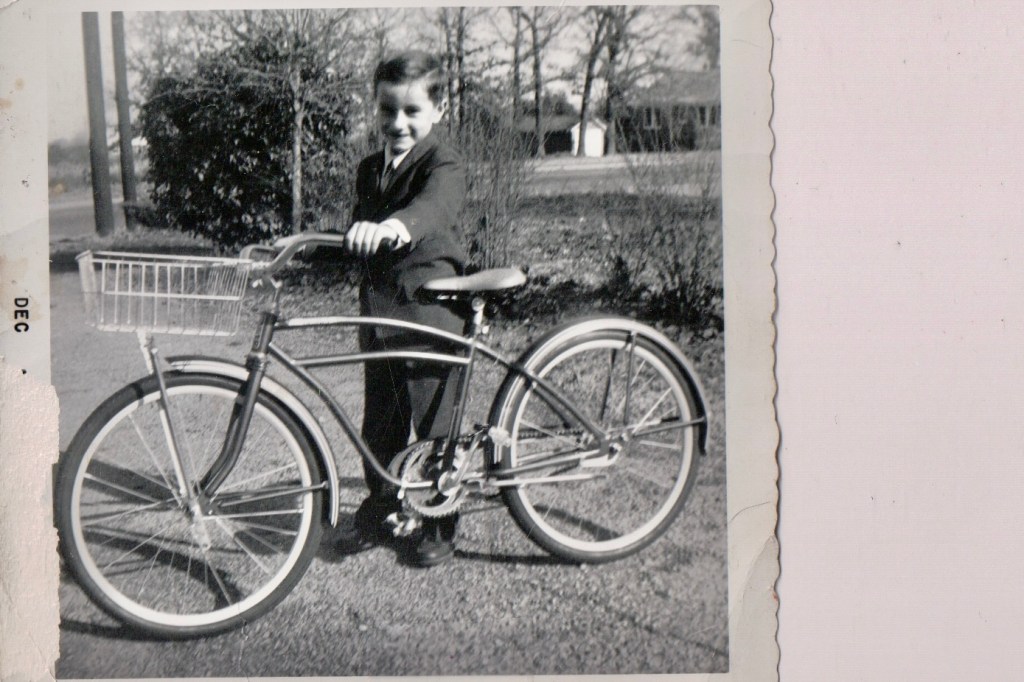
I see December on this old photo which I think indicates that it was my Christmas present in 1955. The bicycle came from Stewarts’ Western Auto store in Saluda about a mile from where I was photographed. It was my first bicycle after the hand-me-down that I learned to ride on. The Western Flyer stood twenty-four inches tall and had twin white pin stripes on the red fenders.
The basket was the most important accessory because it earned me a fortune in soft drink/candy money. Soda pop came in returnable bottles worth three cents. In a hour or two I could find enough bottles to pay for snacks. As a child, I did not realize how patient Preacher Bryant was. He ran the Shell station just up West Church Street and graciously took my returns which I immediately converted into an Upper Ten or a Baby Ruth.
I rode all over town without constraints. Jennings Street was a popular destination. Ricky Yarborough, my best bicycling friend, lived there in his grandmother’s house. Sometimes we would just polish up our machines and admire their beauty, work on model cars, or go to the Western Auto to look at accessories. By that time I had twenty-six inch bike with chrome fenders and a built-in headlight. I had gone from a plain Ford to a Buick.
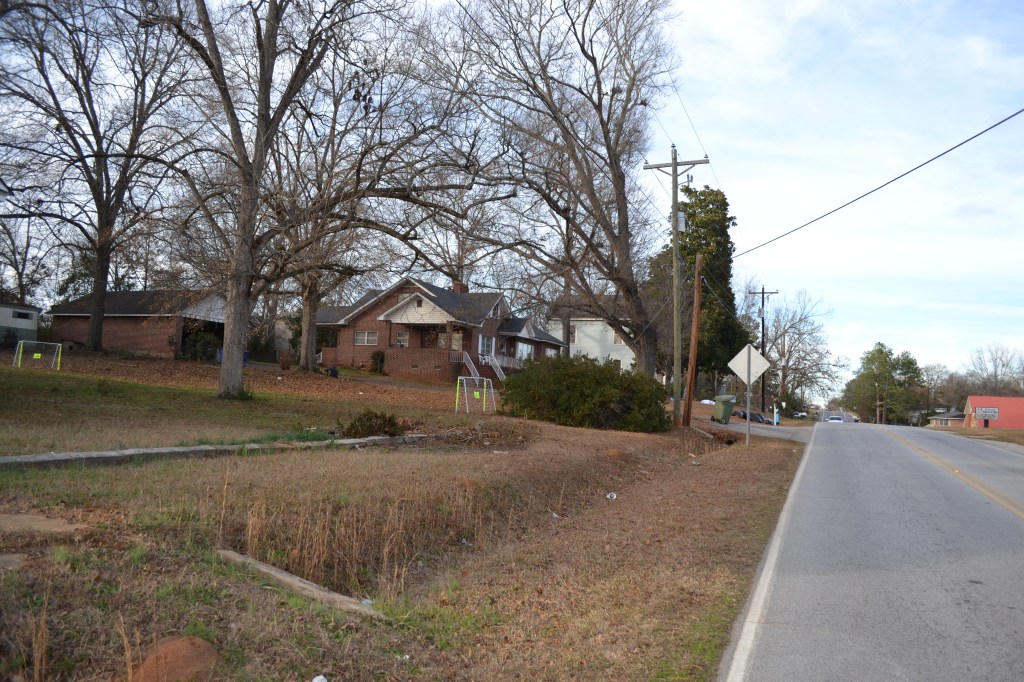
Ricky’s bike was similar to mine but red where mine was black. We staged races starting at the top of the hill where Jennings Street came closest to Red Bank Baptist Church. (The two “giant” hills of Jennings Street are visible in the photo above.) We would race to where Jennings met the Batesburg Highway without breath left to form words. I never won. Do not get me wrong. I was a good rider but Ricky was superb and determined. Ricky moved away and my interest in riding was overtaken by the prospect of driving a car at 14.
After a year at Newberry College, I transferred to USC in Columbia to finish my degree. My son Chris was getting old enough to leave at a Price’s Day Care just around the corner so that my wife Nita could go to work at Southern Bell to help support us.
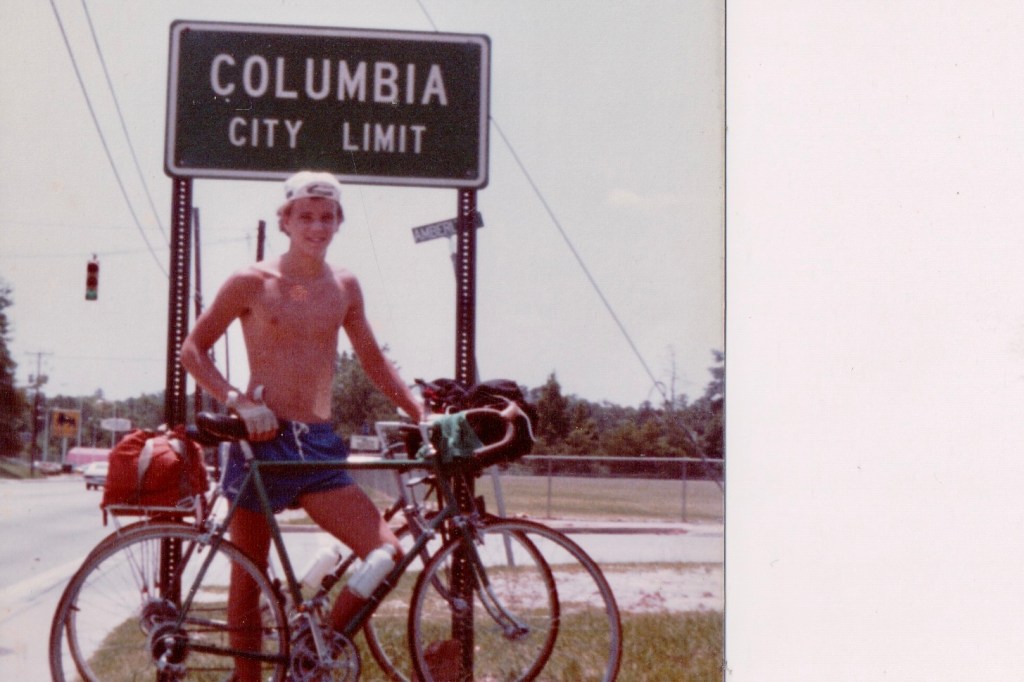
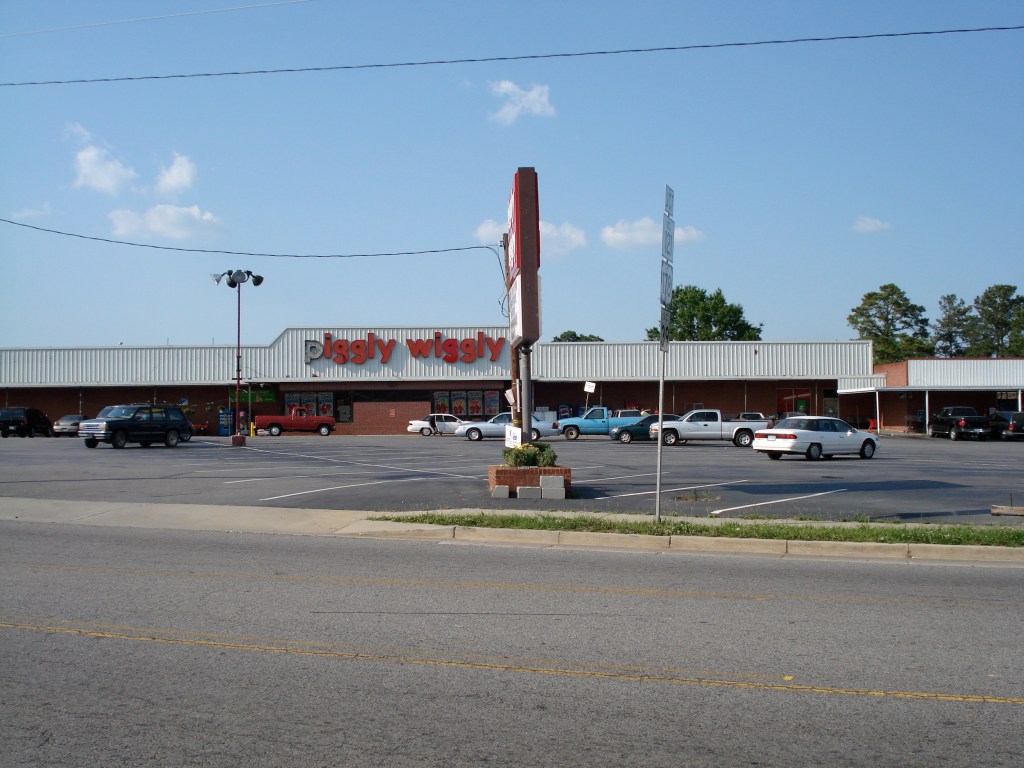
Getting back and to from USC and J. W. Hendrix mobile home park in West Columbia was easy via SCE&G bus, but getting to work after school at Piggly Wiggly #60 on 378 was a problem because the distance was too far too walk and Nita needed our only car. I bought a three-speed Murray from K-Mart and became a regular bicycle commuter for the first time. Weaving through back roads, I could get to work just about as fast on the bike as I could via car.
After graduation and active duty military service, I started to work at Rawlinson Road Junior High School in Rock Hill. In place of a second car, I bought a Honda 360 motorcycle to commute on.
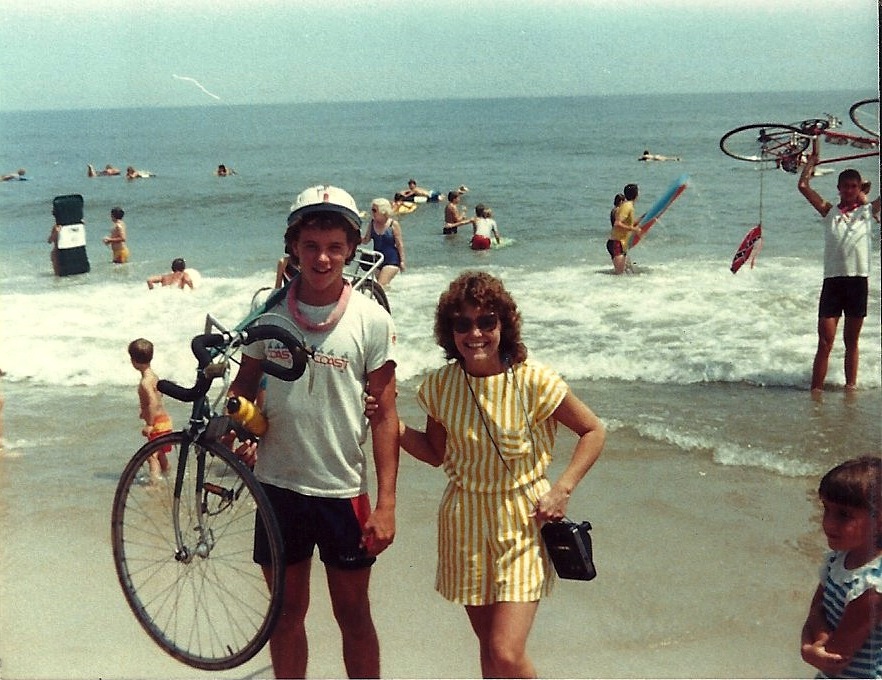
My bicycle days were over until my fifteen-year-old son Chris signed up to bicycle across America with a friend. He and Steve Dietrich rode coast-to-coast from San Diego, California, to Rehoboth Beach, Delaware. His epic ride as a sophomore in high school inspired me to consider bicycling again.
My daughter Danielle and wife Nita are shown standing on the Delaware beach where Chris has dipped his back tire in the Atlantic to finish his transcontinental ride. In recent years I have driven coast to coast several times which renews my awe for what Chris did via bicycle.
We had two cars but Chris seemed to need our second car more than me. At that time a car was to a teen what a phone is now. I recruited Chris and his friend Keith Davis to join me in test riding to Northwestern High School where I now worked one weekend. We made it but Chris laughed at his fellow riders’ slowness.
After a few more weekend practice rides to get in shape, I decided I could handle the commute of about seven miles. My third life as a cyclist was born and continues to this day.
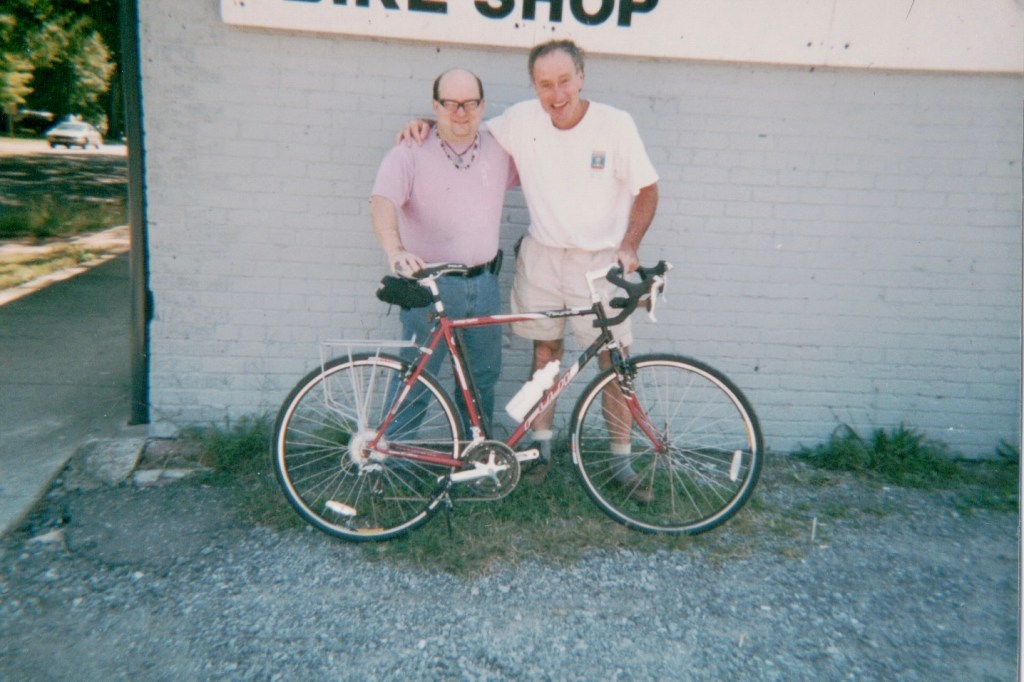
I had four commuters including the turn-of-the-century Fuji road bike pictured above. My former student Robert Baker prepared it for me in his College Cycle Shop on Oakland Avenue near Winthrop University. The Fuji is still in use, though not on a daily basis.
The daily five-mile commute to Northwestern is still etched in my head. So many memories . . . including the day a third-shift nurse somehow did not see me as I pedaled directly in front of the second entrance to Piedmont Hospital on S. Herlong at about 7:30 one morning.
Being hit by a nurse with attendant ambulances a parking lot a way had advantages. I was scooped up and checked out in the emergency room with all the alacrity and care that that is depicted on the best emergency shows on tv. My helmet was cracked and my jacket and shirt torn from my back in the slide that sent me down Herlong after my slipping across the nurse’s hood into her windshield.
I was very sore but all right, though my public crash caused a bit of stir at Northwestern. I was back at work in time to take over my second period. My Navy blue all-aluminum Canondale was twisted like a pretzel giving Robert Baker a chance to sell me yet another bicycle.
Back and to each and every day I went, except on days when rain was already present and heavy. My odd choice for adult transportation had become a habit. In the mornings I liked the direct contact with the outside that my indoor job sealed me from; in the afternoons I needed the exercise as break from the mental rigor of commanding the attention of teenagers thirty at a time. Eschewing the need for pumping gas into a car appealed to my Sierra Club mindset.
How many times did I answer, “Why do you ride a bike?” often followed by “Don’t you have a car?” Adult bike riding in Rock Hill is a lonely endeavor but there are antecedents. During the early twentieth century Rock Hill was an epicenter for the latest craze: bicycle racing. We had two wooden velodromes and the mayor of Rock Hill raced the mayor of Fort Mill before large crowds. (Some of that history is captured in the display adjacent to our current sunken Velodrome in River Walk just off Cherry Road.)
I also knew of the legendary ride of Paul Neal, who was affiliated with the shop where Chris bought his Schwinn Super Le Tour that carried him across America. Paul rode across America as a teenager in a ride that was reported in newspapers, creating an opportunity that saw the mayor of Los Angeles present him a key to the great western city upon his arrival. Paul recreated his famous ride a few years ago in his late 60s.
I had that inspiration in the back of my mind and the newspaper stories about a young biology teacher who rode from his home in York to teach at Fort Mill High School each day. Bill Hilton ended up at Northwestern where I taught. His ride was about triple the length of mine.
Riding connected me to other odd people who formed the Rock Hill Bicycle Club, formed by Dick of Dick’s bicycle shop. We rode criteriums through rural York and Chester Counties; for a time we rode to Myrtle Beach each year. I earned three or four Assault on Mitchell badges for completion of a race that started at Memorial Auditorium in Spartanburg and finished atop Mount Mitchell.
That hundred mile ride caught the interest of riders from across the U.S. and beyond. I remember leaders of the pack whom I glanced at on the starting line finishing and riding back down from the east coast’s highest point whizzing past me so fast that I could not see them beyond a blur through my salt-caked eyes as I struggled with the last twenty miles of the hundred mile event.
Hours later when I made the top, I stashed my bicycle into the luggage hold of a big charted bus and gladly sought the comfort of upholstery, glad to be borne back to Spartanburg in comfort.
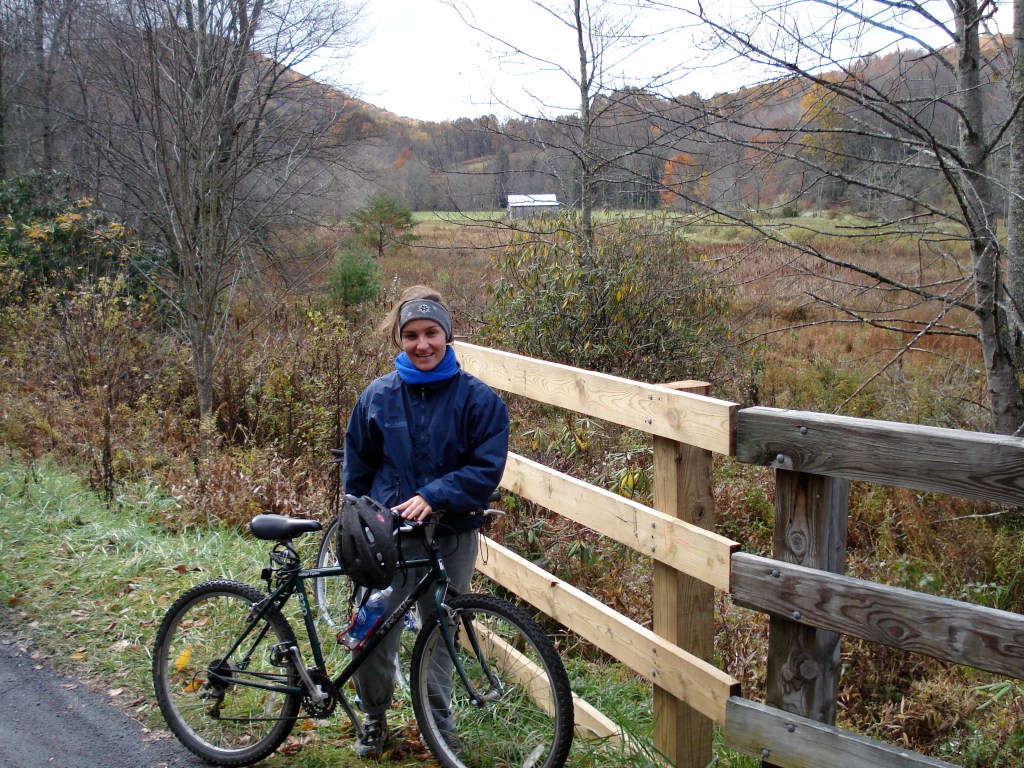
I have been lucky enough to ride with my children, though I am mainly a solo rider. Chris and I rode to Columbia and on to Saluda to see relatives years ago. Elle and I did the Virginia Creeper Trail. Restricted to just bicycles, it puts on display what bicycle transportation could be.
What do the motorists who speed by me think of an old man on a bicycle? I suspect they think that I have lost my license, but I am used to the oddness of being out of a car because I walk places on a daily basis. I still hop on my bicycle on Sunday afternoons when Rock Hill traffic is tamer than normal and spin around just to see some territory and haul it in my pick-up to go camping from time to time.
I am not sure if children ride bicycles much any more. Video may have taken over what this small town boy took for granted: pedaling for pleasure. It is a part of the odd brand, what I am known for.
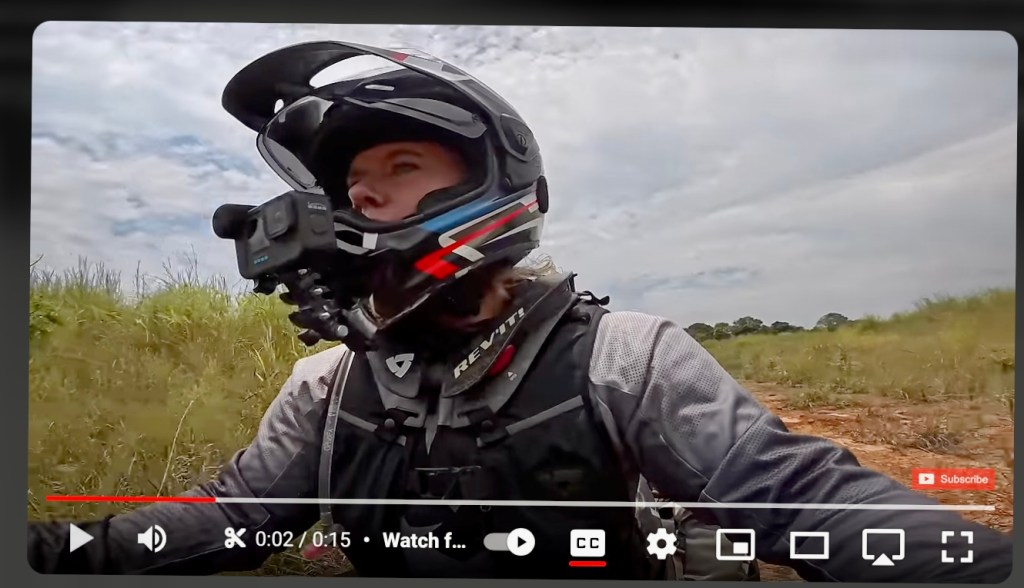
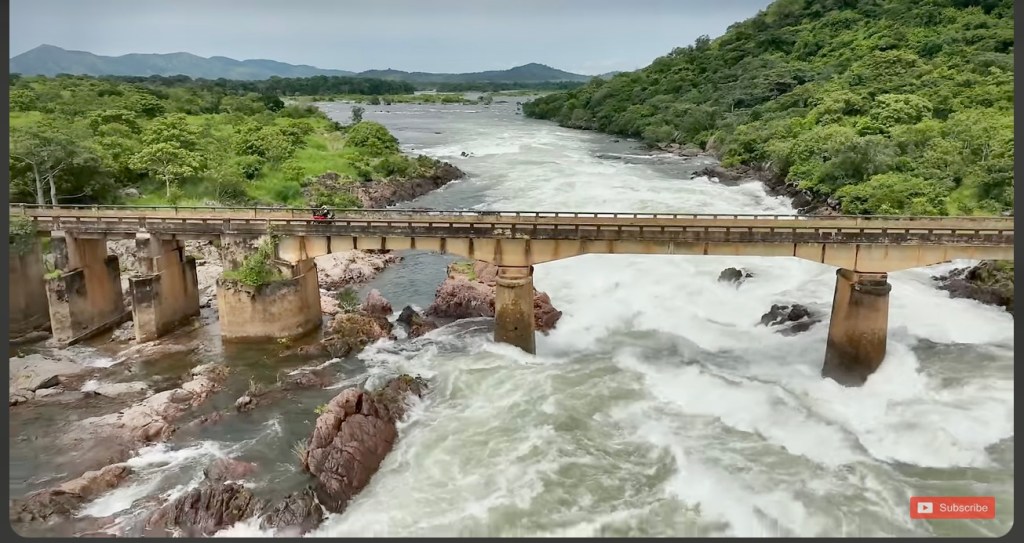
is Noraly Shoenmaker outside of You Tube. In 2018 the young geologist stopped scouting mining sites, residing in Holland, and started living on a 300 CC motorcycle. Her home is literally the remote world. She rides on “tracks” or unpaved roads in remote places reporting what she sees. She has filed hundreds of blog posts running about twenty minutes each.
My friend Pete Kreen, a motorcycle enthusiast, tipped me off to her site two years ago. I tuned in to watch her ride from the tip of South America in Puento Arenas, Argentina, near Cape Horn to Prudhoe Bay, Alaska, on the edge of the Arctic Ocean. Since then she has ridden from India back to Holland and through the Mideast. She is currently riding Africa country to country and is in the Central African Republic.
Screenshot
She does not tour familiar big cities. She does attempt to always ride village to village so what her more than two million viewers see are rural people in natural habitats. She eats what she can find along the way and has encounters with natives where they live outside of the commercial world that I live in.
Her motorcycle caught my interest first. Because of her small size and need to navigate dirt, she rides a 300 CC Honda that recently fell out of a pirogue (canoe carved from a log) into the Congo River separating Congo from the Central African Republic of Congo. She stirred my inner motorcyclist–I owned a Honda 360 in the 1970s and rode it back and to for work–but my interest in her machine soon gave way to her way of showing humanity to humanity.
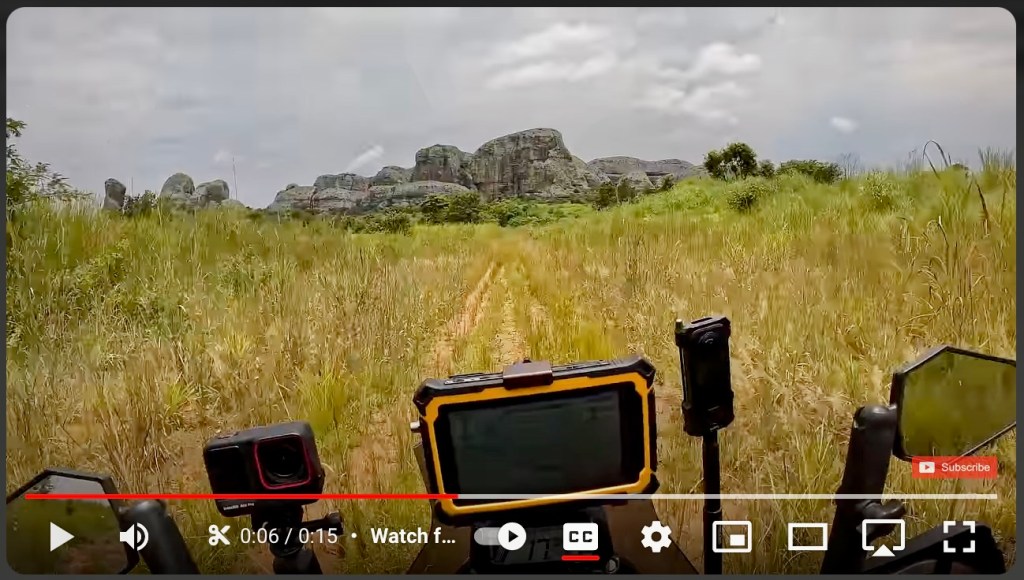
She keeps her opinions and private life to herself and is to modesty what Donald Trump is to narcissism. She is an observer of geology, wildlife, and people in a journalistic way that places the viewer aboard her motorcycle and within her geographical location. Her editing skills–she creates all of her content–suggest someone who could publish video for National Geographic. She uses two Go Pro cameras and a drone to capture footage that she edits when she can find electricity and a SIM card to transmit on a laptop.
Screenshot
Those items are part of the precious weight that she scrupulously seeks to avoid. Viewers have seen her drop her Honda and bog down to her seat more times than I have fingers. She is an expert in using her small frame to position herself backwards against her fallen motorcycle to raise it. Until I started viewing her site, I thought I knew something about dirt roads from my rural South Carolina upbringing in the 1950s. Little did I know that those slick muddy tracks were comparative interstate highways compared to the rural third world she inhabits.
Through her blogs, I have seen vehicles so entrapped in mud that they have had to be abandoned until a dry season emerges. The “tracked” third world of her travels goes by donkey, camel, foot, and motorcycle. Noraly is weighted down but she often travels along side Chinese-made motorcycles in remote places that convey whole families and household goods.
I love geography for its own sake and her Itchy Boots taught me more about North and South America than I had accumulated via a long lifetime of learning, yet that is not what places her travels deep in my heart.
It is her encounters with people. Her Spanish and Portuguese are excellent and her French, adequate; she picks up local languages fast, earning her respect and smiles from natives.
She uses her bright smile and engaging, fearless personality to find out about people she meets and often boards with them in remote places. She is as expert in drawing out the lives of those she encounters as the best of NPR reporters.
Screenshot
She has taken me into the lives of ordinary people in more than 100 countries. Her method is rooted in allowing them to speak for themselves. Occasionally the viewer gets a whiff of her worldview (especially in regard to wildlife preservation) but not often. She recently pointed out that her sojourn among the Pygmy tribes in Congo gave her a rare chance to feel tall because she was on average a head taller than Pygmies. She went on to say that people in the Netherlands are quite tall. Poof! That remark came and went quickly because she stands at an oblique angle from what typical internet influencers do.
I am a somewhat melancholy person but every one of her broadcasts fills me with the kind of joy that often sends me to the next room to tell my wife Nita about what I saw in her contact with rural people in villages. She is a humanitarian and roving ambassador to the world in a Jimmy Carter kind of way.
One lone female motorcyclist has show me the goodness of humanity in remote locations around the globe. I hoard programs–she posts two in a good week–so that I have an experience to cheer me up at the end of the day at least once a week. Her audience comments give me a way to test my own experience. “Am I crazy to be so enamored of her reports?” I ask myself. For sure, “No.” Her followers exceed two million and reflect the wonder and joy that I experience, too, in comments that uplift in multiple languages.
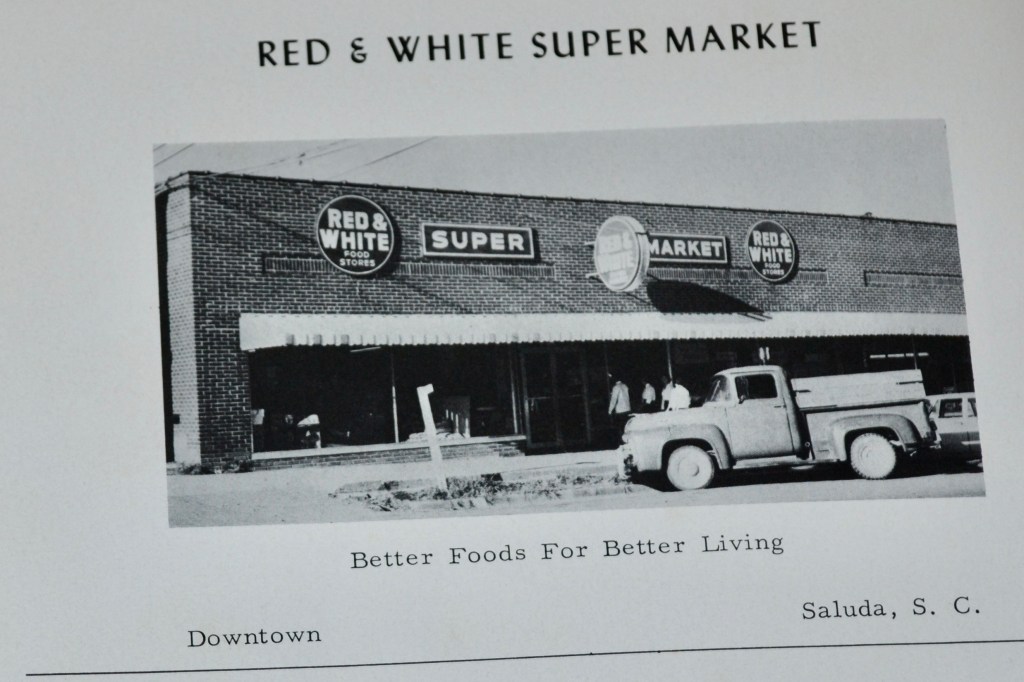
was a supermarket in Saluda, SC, and my first regular pay job. It was three doors down from Ben Hazel’s Grocery Store where I used to take lists of items that my mother Leona wanted. Mr. or Mrs. Hazel would find the items and give them to me carry home or arrange for delivery.
Alfred and Miriam Adams opened their Red and White Supermarket on Church Street just shy of the corner of Main after the Hazel’s Grocery closed. Supermarkets were new and exciting in 1962 when I went to work. I was 14 and at an inflection point in my life because my father died that year.
The Adams were a young couple in their twenties who pooled their savings from working for Winn-Dixie to open their own supermarket when bleach still came in brown glass bottles and frozen food was in its infancy. The store sparkled. All can goods were rotated and faced front. A customer could find his face in the floor. The glass windows were hand waxed weekly by me or Alfred.
I learned how to pack the brown bags that held the items that slid down the counter square. Each item was packed with care. Of course, bag boys like myself carried them to customers’ cars. We usually double-timed back to the store because customers were not allowed to wait and back up. Friendly, fast service was paramount.
I have three university degrees, but in some ways what I learned in that store rivals the substance of any one of those curricula programs. I wore a tie and a white shirt covered by a crisp white apron. My learning was in public and based on following the work of my master, Alfred. He was demanding and taught by showing and doing himself. I watched him work and interact with other employees and customers, imbibing lessons without conscious thought that still stick to me.
Soon I became a good enough stocker to have my own aisles in the middle of store. I stacked cans face forward with speed and efficiency but stopped what I was doing to engage any customer close to me as per Alfred’s way of smiling at each and everyone who entered the store.
Bagging, stocking, hauling empty drink bottles to the back, and unloading trucks led to a promotion to the meat market where I learned how to wrap slice meat, cut chickens, shoulder a side of beef, and grind hamburger. Meat cutters were difficult to find and keep so part of my job was to keep the man in charge happy by making his life a little easier.
George Byrd Yarborough was tall and slim and had curly hair atop his long face. He looked like a movie star with red eyes. Yes, he had the problem; otherwise, he was an outstanding worker who drew customers and kept the most important department in store humming. We sold meat in great volume leading to Alfred employing a young woman in her twenties to help wrap. She was pleasant and sincere but she could not move at super speed or wrap with precision that pleased George. I remember him losing his temper with her and complaining in loud voice from the back about her ineptness to me. In hindsight, I think that was an oblique compliment to me, though I felt sorry for her. Joy was her name. She was soon gone.
Not long after to my great shock so was George. He and his father Horace were killed one weekend over a gamecock. They got into an argument with a handler at cock fight and were gunned down. I did not know much about the incident because it was hushed up but their deaths made the papers as they say. I would no longer be asked to fetch George Byrd’s big two-door DeSoto coupe from the back near quitting time. To this day I see the mint green and white two-tone paint and back seat filled with empty Blue Ribbon beer cans in my head. It was the longest car I had ever driven and shifted via buttons on the left side of the dash.
After a series of temporary meat cutters, we landed Romie Webb. My first impression of him was that the comic book ad for the 90 lb. weakling in need of the free muscle building kit for sale had come to life. He looked like the before image who was suffering sand kicked in his face on the beach with bikini clad beauties looking on.
I was wrong. Romie was strong, efficient, and deliberate. He had an astronaut haircut, fair hair, and black glasses that accentuated his features. As a worker, he was Alfred’s match and that said a lot. He was good with customers but not a talker, which is why Bunk Shealy could so get on his nerves. Mr. Shealy was a retired Ford mechanic who lived nearby with his wife and a great many cats almost under the town water tank. I loved seeing him make his way into our market area holding his cane with his shaky hands. He was there to beg scraps for his cats.
What I most loved was seeing him interact with Romie in a two-or-three-times-a-week showdown. Bunk would start some line of small talk with Romie that was seeded with exaggerations. Romie would play the straight man with a serious demeanor and the kind of questioning voice a lawyer uses in court. Pretty soon Bunk’s scrap bag would be a full as he could manage and the mock hollering contest would conclude. Bunk left smiling and Romie tried to keep his straight face. Their animated theater bit was another part of my Red and White education.
No one from those days looms larger than Luisus (pronounced loo shush) Carrol. He always wore a paper service cap associated with dining establishments and a wide smile. He was singular for being the self-proclaimed best produce man in South Carolina. His friendly bombast was accurate as I found from working in other supermarkets later on. His displays popped; he used colors to break up presentation and displayed fruits and vegetables the way florists work flowers.
In those segregated days he was my only solid link into African-American lives. I had known him in my younger days when he delivered groceries from Hazel’s to our house. His smile and salesman’s skill led to my mother baking an extra pie for him on delivery days. He came into my meat market territory routinely to control the rotisserie that hung over the bacon and sausage portion of the meat counter. I did not take an interest in his barbecue formula but it made the store smell like time to eat. To this day I can still hear his fine baritone singing Down by the Riverside in the back where he readied his merchandise as the doors swung open from the backroom.
My best friend was Nathan Powell who came to reside in the produce department. He learned from the master and soon controlled his area of the store as I did mine when the boss went home. He is the reason I put words down on this site. (See What I Want to Do with danielforrest.org at top.) We used to leave the store as close to 9 P.M. on Saturday night as possible to slide into his old but elegant blue Chrysler for the ride to Winnie Winn’s restaurant. We would find a booth and wait for our hamburger steaks to arrive: two kings of the world on Saturday night. There we were with our stuffed brown pay envelopes in a restaurant ordering food like hot shots and talking about girls and cars. I find tears in my eyes so I want to finish this remembrance with delivering groceries.
Somewhere along the line I became the main delivery van driver which meant keys to the white Chevy van with Red and White logos on the doors and a motor up front beside the driver, no seats in the back. I used it on Wednesdays in advance of double stamp day. The Adams had instigated double Top Value stamps on Thursday grocery purchases. I drove to the shirt plant, hosiery mill, chenille plant, the Nantex, Deering-Milikan: every cotton mill and sewing plant in the textile town of Saluda. I weaved in and out of cars inserting colorful circulas advertising weekly specials under wiper blades of parked cars. The Adams took great care in laying out ads that fetched customers that always included a loss leader like fryers @ 3 lbs. for a dollar.
Driving that van gave me a sense of importance and leads to way to break off my remembering with Saturday deliveries and what I learned from that work. Downtown Saluda was a sea of faces on Saturday with crowds so thick that navigating sidewalks required weaving in and out of pockets of people. The low wall surrounding the courthouse would be covered with sitters engaged in once-a-week-come-to-town conversation.
People would be propped on cars, coming to and fro from stores, and doing Saturday business. We got the groceries to the cars on such days that felt like festivals. Those that did not have a car to be conveyed back home in could count on deliveries. Close to half of our customers were African-American and some did not have driver’s licenses or cars. No problem. You buy groceries with us and we deliver for you.
I made two Saturday runs up and down Bouknight Ferry Road on Saturday to deliver in the solidly segregated area of Saluda. I was a no-nothing white kid popping in and out of homes occupied by people I was not allowed to go to school with or sit in a theater with. Walking in and out of those homes was a trip into a different world.
I remember one order that I sometimes delivered on the far end of Bouknight Ferry by turning down U.S. 378 and driving three miles or so toward Columbia before turning onto dirt lane. I had to coax the lady who rode with me to sit up front in the only other seat in the vehicle. Her children would spread out in back among the bags and boxes of groceries. She felt strange or afraid riding up front with a white boy but it seemed logical to my young mind. I remember the smell of the tar-paper covered shack she lived in. It was nothing like my comfortable house. Flies covered my perspiring face as I lugged groceries in. The canned goods, flour, rice, and sugar I brought in must have seemed like Christmas to it inhabitants. The sink had a pump handle and there were no light fixtures. I saw directly into the heart of racial inequality as I as coming of age and learned lessons that still stick to this day.
Back in Saluda, SC, in the 1950s I was a Royal Ambassador for Christ. Being an RA meant developing Christian character in the company of boys my own age to Red Bank Baptist Church. To me in meant doing stuff with kids my age aka Stephen King’s Stand By Me. I suppose my character was developed by this Baptist Boy Scout outfit but not due to any conscious effort on my part.
My favorite time of the weekly meeting was the ride home. We were delivered to Red Bank by mothers or fathers who were probably as glad for time alone as the character development. We were taken home by either Carmen Charlie Charles or Kirby Able. We had a choice and a heap of thinking went into that choice.
Kirby had a Volkswagen Vanagon with rows of seats and much more pizazz and appeal than our parents Impalas, Galaxy 500s, or Plymouth Furies. Claim shot-gun and you could co-pilot with Kirby and watch him take the VW through the four gears, on the floor, not the steering column. I liked the notion of not having a hood best. You seemed pushed through the air toward your destination. But for all that, I almost never chose to ride with Kirby, who he was a neighbor two doors up on West Church Street, even though he usually carried my younger brother Cally home.
No, I much preferred Carmen for a variety of reasons. He charmed me. I knew other men who wore overalls like a uniform as he did, but they were not as neat as Carmen. He put his Dee Cees over a Dickie work shirt that was either green or blue and always neatly laundered. You could tell that he had changed into a fresh one after his day’s work at the saw mill. He always had a vinyl pocket liner with a full complement of writing utensils in his shirt pocket and would graciously loan one to fill in a lesson with.
Carmen wore round wire frames that are now popular but back then they weren’t. My notice went more to his hair and cheeks than those glasses. Blood vessels had apparently burst in his perpetually tanned cheeks, leaving a purple tinge. Ever seen hair parted so high it seems to be parted in the middle? That was the shape of Carmen’s and he kept it shiny and slicked back with hair tonic.
Carmen’s strongest asset was not his quaint appearance but his transportation. Warm weather meant the saw mill truck, an old Dodge or Chevy with tandem rear wheels and an open bed. After pledging Christian duty and praying at the end of a meeting, the Royal Ambassadors made for the parking lot ahead of its leaders to chase fire flies, tell lies, and talk about fast cars and baseball. Two groups formed around the choice of vehicles in anticipation of ride home and the visit to Fulmers when our dawdling leaders had decided we had played out a requisite amount of energy. The rule was that after a headcount was taken you had to stick with original driver. I always chose Carmen, or Carmen’s vehicle.
Fulmer’s was a first stop. To a passing motorist on the way to Atlanta, it was a truck stop with an attached speed shop and garage underneath on Highway 378 on the Columbia edge of Saluda. To us, it was a chance for one eat and one drink of our choice on Kirby and Carmen. First, though, we had to get there. Back then the two miles or so from the church seemed like a long way. Carmen instructed those who rode in the bed of the truck to stay against the bed of the cab and above all not to throw wood slabs. We liked taking the rough sawn bits of pine and throwing them at bushes and signs on the sly. What could be finer than sailing through the night air while shouting over the roar of a saw mill truck motor?
You’re right. Choosing the treats. R.C. Fulmer kept two soft drink chests full of the best selection of soda pops in Saluda. He even kept Tom’s peach flavor soda, and, of course, Chocolate Soldiers, Dixie Colas, and Upper 10s were a given. I was smart enough to browse for eats first. Why stand in line or be jostled around choosing Frosty root beer or a TrueAde? Best to let the crowd thin; after all, there was the problem of selecting a bag of of fried pork rinds or a can of Koby’s potato sticks or a Merita honey bun or a Baby Ruth. Some of the boys opted to have R.C. spear a hot Pen Rose sausage or an egg floating in vinegar. Seems like it was Johnny Adams who copied me and went about the selection backwards. We liked to eat and drink while looking over R.C.’s selection of mag wheels, chrome add ons, and various speed components.
The final leg of the trip home was better in cold weather because then Carmen would drive his Oldsmobile, one of those mid-1950s Rocket 88’s with a big block high horse power V-8. To this day, I don’t suppose anyone outside of my Carmen-riding RA’s knows our secret. We never told our parents. Quiet, Christian Carmen was a secret Fireball Roberts. Every Saturday night would find he and his wife Stella parked parked sideway on an embankment under of the big pine trees next to turn two of the dirt track in Newberry. Stella would sit crocheting or visiting with friends while Carmen mingled with groups of men who actually knew the racers and their cars. Visiting him on the day of a NASCAR event meant you had to be quiet so that he could hear the sound of the staticky announcer on the AM station report what position Rex White or Joe Weathers or Fireball himself were in.
We pushed Deacon Charles button on more than one occasion One call for “Hit it, Carmen” wasn’t enough. He demanded a chorus and we had to wear him down. Usually it happened on the way out the Denny Highway on the straight stretch short of William Ross’s house. Because he lived the farthest away, we insisted that we go to his house five or six miles out of town first. By the second or third loud chorus of “Hit it, Carmen” the metamorphosis would take hold. Carmen became Fireball II.
The white hood of the two-tone Rocket 88 lifted slowly but steadily. If I were in the middle rear of the rear seat, my boney back would begin to dig into the middle of the metal insignia that separated the back seat but not for long because I would fight the G forces in to sit up to see the hood ornament raise toward the sky. It was a two-winged rocket with a blocky tail and a long sharp noise that seemed to leave the long white hood once Carmen hit 80 or so. We hollered disappointment when he left off shy of 100 but not too loud because we wanted to hear the big V-8 rumble through the dual exhausts on the way down to proper road speed.
Such was the stuff of a small town boy’s night out.
Is something I had not thought about in many years. The phrase occurred to me about half way through my big loop walk around the Ragin Lane/India Hook walk this sunny Sunday.
Just below the multistory apartment complex for old people where Ragin meets India Hook, I stopped to bag up the trash I had accumulated on the walk. Near the the entrance to complex, an older man, perhaps my age, with a small white dog asked me if I were picking up trash. He did not feel well or look healthy but agreed the weather was good even if he was not.
I liked that. He did not have a phone and he was old enough to observe his surroundings rather than a phone screen and to strike up a conversation rather than turn away from a passerby. We talked a bit, though I struggled to understand him through his face mask. His hearing is a few notches worse than mine so I had to talk louder than my usual loud.
I asked, “Were you in the service?” He said, “Yes.” I furthered our conversation by asking if he remembered butt patrol. I detected a smile, mask or no mask.
We both remember standing at arms’ length from soldiers to the left and right to move slowly over ground on military posts. Civilians might not know this but trash is not allowed on base. If a superior can see something that is not dirt or a blade of grass, it must be picked up and pocketed for latter disposal. Cigarette butts do not litter military installations.
He still picks up butts at the entrance to his apartment complex where residents skirt the no smoking rule and we both agreed that cleaning all along prevents excessive littering.
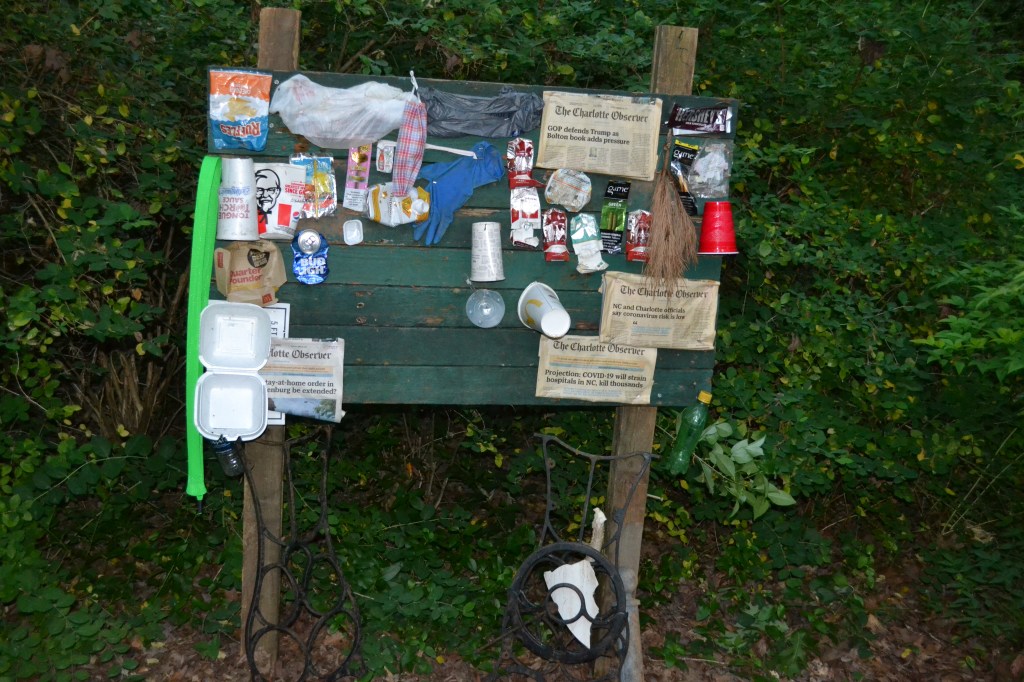
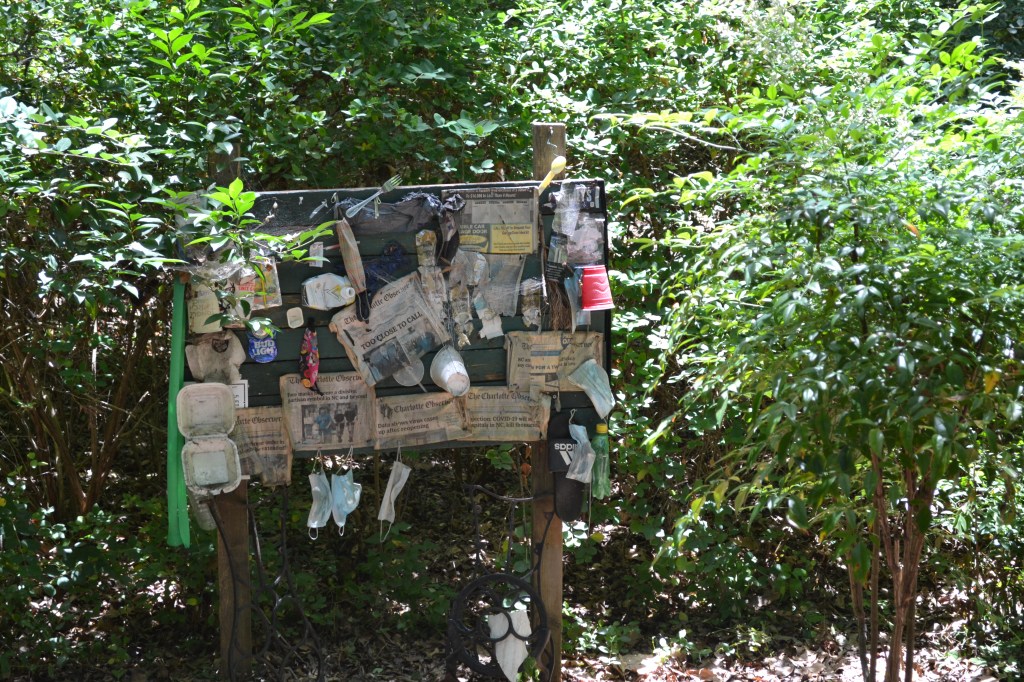
Below are two photos of my trash board: one from early 2020 when I began it and one from today, June 5, 2022. What most people do not realize is that trash endures.
Trash board from early 2020 in the woods behind my houseTrash board as of June 5, 2022
My trash board is an attempt to visualize the staying power of trash. Most–make that all–of the plastic items will outlive me. Small, thin pieces of plastic trash may become invisible to the naked eye but do not decay beyond microscopic balls of petroleum formulations that get tangled into the food chain.
I suppose most people think my picking up trash and putting it on display is odd, but I know from my butt patrol days that it is Army normal.
I feel off center due to the second day of a real life television show called “Russia Invades Ukraine.” Ukraine is a country separate from the dissolved Soviet Union since 1992 that has a history dating back to 32,000 BC. My empathetic nature forces me to worry to the point of sleeplessness.
Compounding my worry is pro-Putin/Russia aggression sentiment that centers around former President Trump’s praise for Putin’s aggression as smart and clever. How can entering another country to kill its citizens and destroy its infrastructure be termed clever?
Republicans leaders are silent or supportive in regard to Trump’s cavalier statement about killing humans. Senator McConnell of Kentucky, number 2 to Trump at 1, is limiting comment and criticizing the Biden administration’s efforts in imposing sanctions on Russia in concert with our NATO allies. Live, in real time, as Ukrainians die Republican leadership stands apart from NATO, our armed forces, and Biden.
Unthinkable until this point in my lifetime. The commander in chief should be be given a benefit of a doubt in regard to imposing sanctions and setting up a policy to thwart Putin–at least initially. That Republican partisans want to wound our leader at this critical time seems to be important to them than Putin’s invasion.
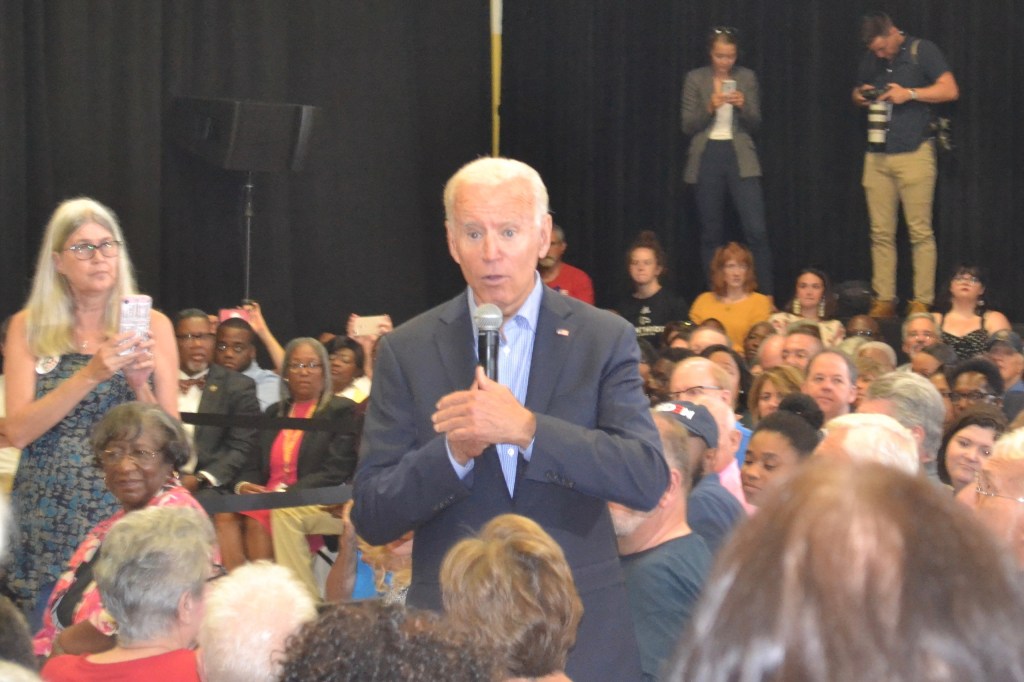
Joe Biden campaigning at Friendship College in Rock Hill
What worries me most is that QAnon, Republicans who purport to actually believe that Democrats kidnap children to eat them, and Fox news personalities such as Tucker Carlson continue to support the January 6, 2021, Trump-led insurrection that attacked the Capitol, terrorized lawmakers, and caused multiple deaths of police officers. Pair that support with indifference to a war of aggression in Ukraine and what does a person logically conclude? Against every instinct, my brain tells me that Republican supporters are capable of supporting a leader like Trump who could do to the United States what Putin is now doing to the Ukrainians.
President Biden is facing Putin’s invasion and the potential beginning of WW III by following treaty commitments, partnering with the 27 NATO countries, and consulting US diplomatic and military experts. He is an experienced old guy political leader who will work methodically and logically to prevent the doomsday that conservative Republican leaders are at best seemingly indifferent to. I hope Biden is successful and I hope that Trumpists do not decide to take over our country. Maybe, just maybe, Trumpists will fade and Republicans will step away from the world of cable news/internet craziness.